


Feed aggregator
You asked for it
 | Hello everyone, last week I posted my AM radio in a 4layer pcb design. I got loads of good suggestions as well as people saying that 4layers was overkill. Here is the two layer design! And thanks for all the suggestions I may upgrade this design using transistors to amplify the rf signal. [link] [comments] |
Інженерні тижні «KPISchool» для учнів 9–11 класів у КПІ ім. Ігоря Сікорського

З 29 грудня 2025 року по 10 січня 2026 року в Національному технічному університеті України «Київський політехнічний інститут імені Ігоря Сікорського» відбудуться Інженерні тижні «KPISchool» — освітній профорієнтаційний захід у межах проєкту «Майбутній КПІшник».
Fuji Electric and Robert Bosch collaborate on SiC power semiconductor modules for EVs
Spunking Cock Christmas Lights
http://pigeonsnest.co.uk/stuff/cocklights.html
"It has to be said that the main reason I have bothered to publish this circuit at all is that it means I can post a diagram of a circuit with a !SPUNK_ENABLE line in it."
Happy Christmas! :-)
(I recently came across this website and there's a lot of interesting stuff there, if you can past the F-bombs. The article on magnetic core saturation is superb!)
[link] [comments]
Exploring ceramic resonators and filters

Ceramic resonators and filters occupy a practical middle ground in frequency control and signal conditioning, offering designers cost-effective alternatives to quartz crystals and LC networks. Built on piezoelectric ceramics, these devices provide stable oscillation and selective filtering across a wide range of applications—from timing circuits in consumer electronics to noise suppression in RF designs.
Their appeal lies in balancing performance with simplicity: easy integration, modest accuracy, and reliable operation where ultimate precision is not required.
Getting started with ceramic resonators
Ceramic resonators offer an attractive alternative to quartz crystals for stabilizing oscillation frequencies in many applications. Compared with quartz devices, their ease of mass production, low cost, mechanical ruggedness, and compact size often outweigh the reduced precision in frequency control.
In addition, ceramic resonators are better suited to handle fluctuations in external circuitry or supply voltage. By relying on mechanical resonance, they deliver stable oscillation without adjustment. These characteristics also enable faster rise times and performance that remains independent of drive-level considerations.
Recall that ceramic resonators utilize the mechanical resonance of piezoelectric ceramics. Quartz crystals remain the most familiar resonating devices, while RC and LC circuits are widely used to produce electrical resonance in oscillating circuits. Unlike RC or LC networks, ceramic resonators rely on mechanical resonance, making them largely unaffected by external circuitry or supply-voltage fluctuations.
As a result, highly stable oscillation circuits can be achieved without adjustment. Figure below shows two types of commonly available ceramic resonators.

Figure 1 A mix of common 2-pin and 3-pin ceramic resonators demonstrates their typical package styles. Source: Author
Ceramic resonators are available in both 2-pin and 3-pin versions. The 2-pin type requires external load capacitors for proper oscillation, whereas the 3-pin type incorporates these capacitors internally, simplifying circuit design and reducing component count. Both versions provide stable frequency control, with the choice guided by board space, cost, and design convenience.

Figure 2 Here are the standard circuit symbols for 2-pin and 3-pin ceramic resonators. Source: Author
Getting into basic oscillating circuits, these can generally be grouped into three categories: positive feedback, negative resistance elements, and delay of transfer time or phase. For ceramic resonators, quartz crystal resonators and LC oscillators, positive feedback is the preferred circuit approach.
And the most common oscillator circuit for a ceramic resonator is the Colpitts configuration. Circuit design details vary with the application and the IC employed. Increasingly, oscillation circuits are implemented with digital ICs, often using an inverter gate. A typical practical example (455 kHz) with a CMOS inverter is shown below.

Figure 3 A practical oscillator circuit employing a CMOS inverter and ceramic resonator shows its typical configuration. Source: Author
In the above schematic, IC1A functions as an inverting amplifier for the oscillating circuit, while IC1B shapes the waveform and buffers the output. The feedback resistor R1 provides negative feedback around the inverter, ensuring oscillation starts when power is applied.
If R1 is too large and the input inverter’s insulation resistance is low, oscillation may stop due to loss of loop gain. Excessive R1 can also introduce noise from other circuits, while being too small a value reduces loop gain.
The load capacitors C1 and C2 provide a 180° phase lag. Their values must be chosen carefully based on application, integrated circuit, and frequency. Undervalued capacitors increase loop gain at high frequencies, raising the risk of spurious oscillation. Since oscillation frequency is influenced by loading capacitance, caution is required when tight frequency tolerance is needed.
Note that the damping resistor R2, sometimes omitted, loosens the coupling between the inverter and feedback circuit, reducing the load on the inverter output. It also stabilizes the feedback phase and limits high-frequency gain, helping prevent spurious oscillation.
Having introduced the basics of ceramic resonators (just another surface scratch), we now shift focus to ceramic filters. The deeper fundamentals of resonator operation can be addressed later or explored through further discussion; for now, the emphasis turns to filter applications.
Ceramic filters and their practical applications
A filter is an electrical component designed to pass or block specific frequencies. Filters are classified by their structures and the materials used. A ceramic filter employs piezoelectric ceramics as both an electromechanical transducer and a mechanical resonator, combining electrical and mechanical systems within a single device to achieve its characteristic response.
Like other filters, ceramic filters possess unique traits that distinguish them from alternatives and make them valuable for targeted applications. They are typically realized in bandpass configurations or as duplexers, but not as broadband low-pass or high-pass filters, since ceramic resonators are inherently narrowband.
In practice, ceramic filters are widely used in IF and RF bandpass applications for radio receivers and transmitters. These RF and IF ceramic filters are low-cost, easy to implement, and well-suited for many designs where the precision and performance of a crystal filter are unnecessary.

Figure 4 A mix of ceramic filters presents examples of their available packages. Source: Author
A quick theory talk: A 455-kHz ceramic filter is essentially a bandpass filter with a sharp frequency response centered at 455 kHz. In theory, attenuation at the center frequency is 0 dB, though in practice insertion loss is typically 2–6 dB. As the input frequency shifts away from 455 kHz, attenuation rises steeply.
Depending on the filter grade, the effective passband spans from about 455 kHz ± 2 kHz for narrow designs and up to ±15 kHz for wider types (in theory often cited as ±10 kHz). Signals outside this range are strongly suppressed, with stopband attenuation reaching 40 dB or more at ±100 kHz.
On a related note, ceramic discriminators function by converting frequency variations into voltage signals, which are then processed into audio detection method widely used in FM receivers. FM wave detection is achieved through circuits where the relationship between frequency and output voltage is linear. Common FM detection methods include ratio detection, Foster-Seeley detection, quadrature detection, and differential peak detection.
Now I recall the CDB450C24, a ceramic discriminator designed for FM detection at 450 kHz. Employing piezoelectric ceramics, it provides a stable center frequency and linear frequency-to-voltage conversion, making it well-suited for quadrature detection circuits such as those built with the nostalgic Toshiba TA31136F FM IF detector IC for cordless phones. Compact and cost‑effective, the CDB450C24 exemplifies the role of ceramic discriminators in reliable FM audio detection.

Figure 5 TA31136F IC application circuit shows the practical role of the CDB450C24. Source: Toshiba
As a loosely connected observation, the choice of 450 kHz for ceramic discriminators reflected receiver design practices of the time. AM radios had long standardized on 455 kHz as their intermediate frequency (IF), while FM receivers typically used 10.7 MHz for selectivity.
To achieve cost-effective FM detection, however, many designs employed a secondary IF stage around 450 kHz, where ceramic discriminators could provide stable, narrowband frequency-to-voltage conversion.
This dual-IF approach balanced the high-frequency selectivity of 10.7 MHz with the practical detection capabilities of 450 kHz, making ceramic discriminators like the CDB450C24 a natural fit for FM audio demodulation.
Thus, ceramic filters remain vital for compact, reliable frequency selection, valued for their stability and low cost. Multipole ceramic filters extend this role by combining multiple resonators to sharpen selectivity and steepen attenuation slopes, their real purpose being to separate closely spaced channels and suppress adjacent interference.
Together, they illustrate how ceramic technology continues to balance simplicity with performance across consumer and professional communication systems.
Closing thoughts
Time for a quick pause—but before you step away, consider how ceramic resonators and filters continue to anchor reliable frequency control and signal shaping across modern designs. Their balance of simplicity, cost-effectiveness, and performance makes them a quiet force behind countless applications.
Share your own experiences with these components and keep an eye out for more exploration into the fundamentals that drive today’s electronics.
 T. K. Hareendran is a self-taught electronics enthusiast with a strong passion for innovative circuit design and hands-on technology. He develops both experimental and practical electronic projects, documenting and sharing his work to support fellow tinkerers and learners. Beyond the workbench, he dedicates time to technical writing and hardware evaluations to contribute meaningfully to the maker community.
Related Content
- SAW-filter lead times stretching
- Murata banks on ceramic technology
- Ceramic packages stage a comeback
- Multilayer ceramics ups performance
- SAW filters and resonators provide cheap and effective frequency control
The post Exploring ceramic resonators and filters appeared first on EDN.
From Hype to Reality: The Three Forces defining Security in 2026
By Andrew Burnett, Interim Chief Technology Officer, Milestone Systems
As we move into 2026, several technology trends that were once mostly confined to research labs and conference keynotes are now stepping into the daily reality of the security industry. What is new today is not the idea of AI itself, but the emergence of Agentic AI – intelligent systems capable of taking autonomous actions across operational workflows. Rather than asking what they might one day do, we are now seeing what they actually do in the field.
In 2026, three technologies will particularly drive this transformation: Agentic AI, Digital Twins and Wearables with Augmented Reality (AR). Each represents an evolution not just in capability, but a step toward fully intelligent, interconnected and immersive security ecosystems.
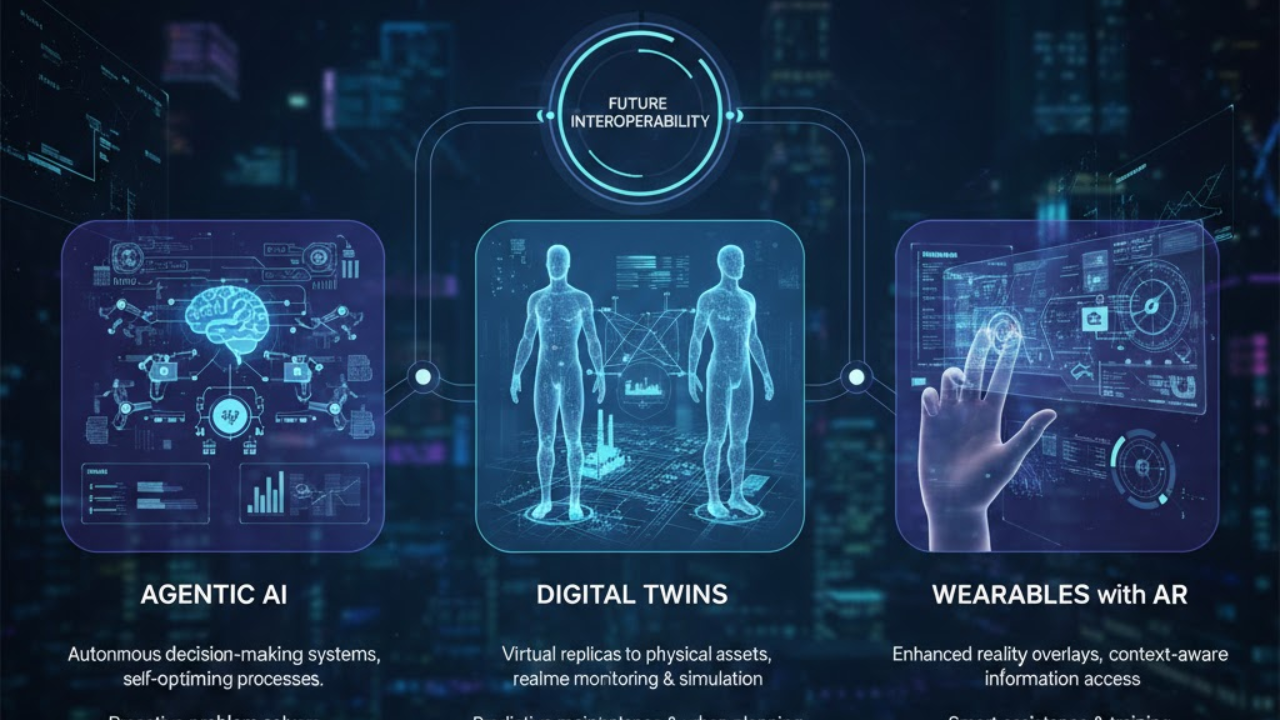
As India accelerates its adoption of smart city frameworks and digital surveillance infrastructure through national programs like the Smart Cities Mission (https://smartcities.data.gov.in/)and the Digital India initiative (https://www.digitalindia.gov.in/), technologies such as Agentic AI, Digital Twins, and AR-enabled wearables are no longer futuristic concepts—they are becoming essential to the daily functioning of security operations across Indian enterprises, public infrastructure, and government systems.
- Agentic AI — From Hype-Cycle to Operational Workflows
Agentic AI, first notable for its capabilities in areas like code generation, is now expanding beyond coding to orchestrate operational workflows across security systems. The shift for 2026 is from capability demonstrations to task-focused agents embedded in operational flows. Rather than one-off proof of concept, we are seeing agents that orchestrate across systems: they ingest video, correlate access logs, detect deviations and then trigger follow-up actions – all without a human translating between disparate interfaces.
According to Indian reports:
- The AI for Viksit Bharat study states that Financial services companies’ front, middle and back offices are expected to be transformed by machine learning and agentic AI.
- The Ministry of Electronics & IT, India’s AI Revolution, notes that AI-driven technologies, such as autonomous agents, are helping SMBs scale efficiently, personalise customer experiences, and optimise operations.
Practical examples include autonomous investigation agents that not only take an alarm, gather the last 30 minutes of multimodal evidence (video, access, sensor telemetry), but also propose and initiate immediate mitigation action for an operator to approve. The value is twofold: speed (reducing mean time to insight) and bandwidth (freeing operators to focus on decisions, not data-gathering).
This momentum is mirrored in global investment patterns. According to recent industry projections, Agentic AI is set to dominate IT budget expansion over the next five years, representing more than 26% of worldwide IT spending and surpassing US$1.3 trillion by 2029. This reflects a decisive shift: organisations are no longer experimenting with AI for select projects – they are operationalising it at scale.
Organisations should stop asking “what might agentic AI do” and start identifying the repeatable security workflows they want automated; for example, incident triage, patrol optimisation, evidence packaging; then measure agent performance against those KPIs. The winners in 2026 will be platforms that expose safe, auditable agent APIs and vendors who integrate them into end-to-end operational playbooks.
- Digital Twins – Moving from Models to Mission-Critical Decisions
Digital twins — the highly sophisticated virtual models that stay synchronised with real-world systems — are also reaching a point of true practicality. The concept is not new. For years, industries like manufacturing and logistics have used digital twins to monitor assets and environments. What’s new is the granularity and scale now possible in security.
According to the Ministry of Communications in India, AI-driven Digital Twins integrate real-time, cross-sectoral data from various sources in a privacy-preserving manner, ensuring a unified and dynamic planning process ensuring integrated planning and fostering a collaborative ecosystem. Digital Twins enable continuous real-time monitoring and predictive analytics. AI enhances data-driven decision-making by simulating multiple scenarios, optimising resource allocation, and improving infrastructure resilience under various conditions.
Organisations such as NVIDIA are utilising digital twins for data centres, integrating cameras, fire alarms, access control and environmental sensors to create a unified, real-time view of operations. Instead of static replicas, we are talking about interactive environments where you can safely test and optimise system behaviour. The value of digital twins goes beyond visualisation and simulation, empowering organisations to monitor, optimise, and actively manage the desired state of multiple subsystems in real-time.
Imagine running a virtual fire-drill scenario that shows pedestrian flow if a corridor is blocked, or simulating lockout strategies to maintain egress while containing a threat. These are not academic exercises — they directly inform SOPs, layout choices and where to place resilient communications or edge compute. For complex estates (airports, ports, multi-tenant high-rises), a unified digital twin reduces configuration drift, accelerates forensic reconstruction and enables predictive maintenance for critical devices.
Looking ahead, the widespread adoption of digital twins is poised to reshape the security industry’s approach to risk management and operational planning. With a unified, real-time view of complex environments, digital twins enable proactive decision-making, allowing security teams to anticipate threats, optimise resource allocation and continuously refine standard operating procedures. Over time, this capability will shift the industry from reactive incident response to predictive and preventative security strategies, where investment in training, infrastructure and technology is guided through simulated outcomes rather than historical events.
- From Gadgets to Game-Changers: Wearables + AR in Action
AR and wearables have had a turbulent history, but their resurgence in 2026 will be different — and AI is the reason. AI transforms wearables from simple capture devices into intelligent companions. It elevates AR from a visual overlay to a real-time, context-aware guidance layer. They shift frontline tools from passive to proactive devices that see, listen, and interpret the environment, delivering timely insights and support through voice, visual or hybrid interfaces.
Government of India, Ministry of Electronics and Information Technology states: India is now prepping for cutting-edge technologies, including 5G, AI, blockchain, augmented reality & virtual reality, machine learning & deep learning, robots, natural language processing, etc.
The momentum behind AR is also reflected in the market. Globally, the AR sector is projected to surge from US$35.8 billion in 2024 to US$233.3 billion by 2030, a compound annual growth rate of 37%. Today, software and services account for the vast majority of AR revenue, highlighting that enterprises are increasingly leveraging AR for operational applications such as training, remote assistance, simulation and real-time decision support.
Crucially, these systems speak natural language. A guard can ask, “When was this area last patrolled?” and receive concise, evidence-backed answers or ask the system to replay the last suspicious approach and mark it for later review. This moves wearables from passive recorders to active decision-support tools, increasing situational awareness while keeping hands and attention free.
While widespread adoption may still be a few years away, the trajectory is clear. The future of security work will be increasingly wearable – through smart glasses, headsets or other wrist-mounted devices – and powered by conversational, intelligent systems that deliver insights and decision support in real-time.
Conclusion — integrate, simulate, augment
Across these trends, the theme is consistent: AI is the enabler that makes previously hyped technologies operationally useful.
For CISOs, facility heads and operations leaders, the practical playbook for 2026 is simple and strategic: prioritise integration (open, auditable APIs), explore simulation capabilities (digital twins that map to SOPs), and pilot wearable augmentation where it reduces time-to-decision. Success is best measured through operational KPIs — response time, false-positive reduction and decision confidence — rather than novelty.
In simple terms, India’s security landscape is evolving quickly, and technologies like Agentic AI, Digital Twins and AR wearables are moving from early trials to real-world use. With national programmes such as Smart Cities Mission and Digital India accelerating modernisation, security leaders are prioritising AI for faster responses, digital twins for better planning, and wearables for stronger situational awareness on the ground. These tools are no longer experimental—they are becoming central to creating safer, more resilient security operations across the country.
After years of excitement and experimentation, we are entering a new era — one where emerging technology no longer feels like prototypes, but like partners.
We are now firmly in an era where these technologies move from promise to practice.

The post From Hype to Reality: The Three Forces defining Security in 2026 appeared first on ELE Times.
Pages




![[link]](https://i.redd.it/1auigdyhix8g1.png)