


Feed aggregator
Power supplies enable precise DC testing

R&S has launched the NGT3600 series of DC power supplies, delivering up to 3.6 kW for a wide range of test and measurement applications. This versatile line provides clean, stable power with low voltage and current ripple and noise. With a resolution of 100 µA for current and 1 mV for voltage, as well as adjustable output voltages up to 80 V, the supplies offer both precision and flexibility.

The dual-channel NGT3622 combines two fully independent 1800-W outputs in a single compact instrument. Its channels can be connected in series or parallel, allowing either the voltage or the current to be doubled. For applications requiring even more power, up to three units can be linked to provide as much as 480 V or 300 A across six channels. The NGT3622 supports current and voltage testing under load, efficiency measurements, and thermal characterization of components such as DC/DC converters, power supplies, motors, and semiconductors.
Engineers can use the NGT3600 series to test high-current prototypes such as base stations, validate MPPT algorithms for solar inverters, and evaluate charging-station designs. In the automotive sector, the series supports the transition to 48-V on-board networks by simulating these networks and powering communication systems, sensors, and control units during testing.
All models in the NGT3600 series are directly rack-mountable with no adapter required. They will be available beginning January 13, 2026, from R&S and selected distribution partners. For more information, click here.
The post Power supplies enable precise DC testing appeared first on EDN.
Space-ready Ethernet PHYs achieve QML Class P

Microchip’s two radiation-tolerant Ethernet PHY transceivers are the company’s first devices to earn QML Class P/ESCC 9000P qualification. The single-port VSC8541RT and quad-port VSC8574RT support data rates up to 1 Gbps, enabling dependable data links in mission-critical space applications.

Achieving QML Class P/ESCC 9000P certification involves rigorous testing—such as Total Ionizing Dose (TID) and Single Event Effects (SEE) assessments—to verify that devices tolerate the harsh radiation conditions of space. The certification also ensures long-term availability, traceability, and consistent performance.
The VSC8541RT and VSC8574RT withstand 100 krad(Si) TID and show no single-event latch-up at LET levels below 78 MeV·cm²/mg at 125 °C. The VSC8541RT integrates a single Ethernet copper port supporting MII, RMII, RGMII, and GMII MAC interfaces, while the VSC8574RT includes four dual-media copper/fiber ports with SGMII and QSGMII MAC interfaces. Their low power consumption and wide operating temperature ranges make them well-suited for missions where thermal constraints and power efficiency are key design considerations.
The post Space-ready Ethernet PHYs achieve QML Class P appeared first on EDN.
Silicon photonic interposer start-up NcodiN raises €16m in seed funding
Active current mirror

Current mirrors are a commonly useful circuit function, and sometimes high precision is essential. The challenge of getting current mirrors to be precise has created a long list of tricks and techniques. The list includes matched transistors, monolithic transistor multiples, emitter degeneration, fancy topologies with extra transistors, e.g., Wilson, cascode, etc.
But when all else fails and precision just can’t suffer any compromise, Figure 1 shows the nuclear option. Just add a rail-to-rail I/O (RRIO) op-amp!
 Figure 1 An active current sink mirror. Assuming resistor equality and negligible A1 offset error, A1 feedback forces Q1 to maintain accurate current sink I/O equality I2 = I1.
Wow the engineering world with your unique design: Design Ideas Submission Guide
The theory of operation of the ACM couldn’t be more straightforward. Vr , which is equal to I1*R, is wired to A1’s noninverting input, forcing it to drive Q1 to conduct I2 such that I2R = I1R.
Therefore, if the resistors are equal, A1’s accuracy limiting parameters, like offset voltage, gain-bandwidth, bias and offset currents, etc., are adequate, and Q1 doesn’t saturate, I1 can be equal to I2 just as precisely as you like.
Obviously, Vr must be >> Voffset, and A1’s output span must be >> Q1’s threshold even after subtracting Vr.
Substitute a PFET for Figure 1’s NFET, and a current-sourcing mirror results, as shown in Figure 2.

Figure 2 An active current source mirror. This is identical to Figure 1, except this Q1 is a PFET and the polarities are swapped.
Active current mirror (ACM) precision can be better than that of easily available sense resistors. So, a bit of post-assembly trimming, as illustrated in Figure 3, might be useful.

Figure 3 If adequately accurate resistors aren’t handy, a trimmer pot might be useful for post-assembly trimming.
Stephen Woodward’s relationship with EDN’s DI column goes back quite a long way. Over 100 submissions have been accepted since his first contribution back in 1974.
Related Content
- A current mirror reduces Early effect
- A two-way mirror—current mirror that is
- A two-way Wilson current mirror
- Current mirror improves PWM regulator’s performance
The post Active current mirror appeared first on EDN.
My setup
 | submitted by /u/Life_Ad_708 [link] [comments] |
Charting the course for a truly multi-modal device edge

The world is witnessing an artificial intelligence (AI) tsunami. While the initial waves of this technological shift focused heavily on the cloud, a powerful new surge is now building at the edge. This rapid infusion of AI is set to redefine Internet of Things (IoT) devices and applications, from sophisticated smart homes to highly efficient industrial environments.
This evolution, however, has created significant fragmentation in the market. Many existing silicon providers have adopted a strategy of bolting on AI capabilities to legacy hardware originally designed for their primary end markets. This piecemeal approach has resulted in inconsistent performance, incompatible toolchains, and a confusing landscape for developers trying to deploy edge AI solutions.
To unlock the transformative potential of edge AI, industry must pivot. We must move beyond retrofitted solutions and embrace a purpose-built, AI-native approach that integrates hardware and software right from the foundational design.
The AI-native mandate
“AI-native” is more than a marketing term; it’s a fundamental architectural commitment where AI is the central consideration, not an afterthought. Here’s what it looks like.
- The hardware foundation: Purpose-built silicon
As IoT workloads evolve to handle data across multiple modalities, from vision and voice to audio and time series, the underlying silicon must present itself as a flexible, secure platform capable of efficient processing. Core to such design considerations include NPU architectures that can scale, and are supported by highly integrated vision, voice, video and display pipelines.
- The software ecosystem: Openness and portability
To accelerate innovation and combat fragmentation for IoT AI, the industry needs to embrace open standards. While the ‘language’ of model formats and frameworks is becoming more industry-standard, the ecosystem of edge AI compilers is largely being built from vendor-specific and proprietary offerings. Efficient execution of AI workloads is heavily dependent on optimized data movement and processing across scalar, vector, and matrix accelerator domains.
By open-sourcing compilers, companies encourage faster innovation through broader community adoption, providing flexibility to developers and ultimately facilitating more robust device-to-cloud developer journeys. Synaptics is encouraging broader adoption from the community by open-sourcing edge AI tooling and software, including Synaptics’ Torq edge AI platform, developed in partnership with Google Research.
- The dawn of a new device landscape
AI-native silicon will fuel the creation of entirely new device categories. We are currently seeing the emergence of a new class of devices truly geared around AI, such as wearables—smart glasses, smartwatches, and wristbands. Crucially, many of these devices are designed to operate without being constantly tethered to a smartphone.
Instead, they soon might connect to a small, dedicated computing element, perhaps carried in a pocket like a puck, providing intelligence and outcomes without requiring the user to look at a traditional phone display. This marks the beginning of a more distributed intelligence ecosystem.
The need for integrated solutions
This evolving landscape is complex, demanding a holistic approach. Intelligent processing capabilities must be tightly coupled with secure, reliable connectivity to deliver a seamless end-user experience. Connected IoT devices need to leverage a broad range of technologies from the latest Wi-Fi and Bluetooth standards to Thread and ZigBee.
Chip, device and system-level security are also vital, especially considering multi-tenant deployments of sensitive AI models. For intelligent IoT devices, particularly those that are battery-powered or wearable, security must be maintained consistently as the device transitions in and out of different power states. The combination of processing, security, and power must all work together effectively.
Navigating this new era of the AI edge requires a fundamental shift in mindset, a change from retrofitting existing technology to building products with a clear, AI-first mission. Take the case of Synaptics SL2610 processor, one of the industry’s first AI-native, transformer-capable processors designed specifically for the edge. It embodies the core hardware and software principles needed for the future of intelligent devices, running on a Linux platform.
By embracing purpose-built hardware, rallying around open software frameworks, and maintaining a strategy of self-reliance and strategic partnerships, the industry can move past the current market noise and begin building the next generation of truly intelligent, powerful, and secure devices.
 Mehul Mehta is a Senior Director of Product Marketing at Synaptics Inc., where he is responsible for defining the Edge AI IoT SoC roadmap and collaborating with lead customers. Before joining Synaptics, Mehul held leadership roles at DSP Group spanning product marketing, software development, and worldwide customer support.
Related Content
- Edge AI: Bringing Intelligence Closer to the Source
- An edge AI processor’s pivot to the open-source world
- Edge AI powers the next wave of industrial intelligence
- Synaptics, Google partnership targets edge AI for the IoT
- How Advanced Packaging is Unleashing Possibilities for Edge AI
The post Charting the course for a truly multi-modal device edge appeared first on EDN.
Swansea’s professor Owen Guy wins SEMI Academia Impact Award
Тренінг «Security first: як не стати жертвою фінансових афер» для студентів КПІ ім. Ігоря Сікорського

Експерт Департаменту інформаційної безпеки ПУМБ Вадим Різник і експертка Центру моніторингу транзакцій ПУМБ Наталія Булава поділилися досвідом щодо протистояння шахрайству.
КПІ ім. Ігоря Сікорського співпрацюватиме з GSC Game World

📌 ТОВ «ГСК Україна» спеціалізується на розробленні програмного забезпечення для комп’ютерних ігор, є розробником легендарної серії ігор S.T.A.L.K.E.R., включно зі S.T.A.L.K.E.R. 2: Heart of Chornobyl.
У межах співпраці заплановано:
University of Waterloo’s Dr Lan Wei awarded Canada Research Chair
NPL leading Government-backed metrology project to accelerate UK’s role in compound semiconductor innovation
Keysight Hosts AI Thought Leadership Conclave in Bengaluru
Keysight Technologies, Inc. announced the AI Thought Leadership Conclave, a premier forum bringing together technology leaders, researchers, and industry experts to discuss the transformative role of artificial intelligence (AI) is shaping digital infrastructure, wireless technologies, and connectivity.
Taking place on December 9, 2025, in Bengaluru, the conclave will showcase how AI is redefining the way networks, cloud, and edge systems are designed, optimized, and scaled for a hyperconnected world. Through keynote sessions, expert panels, and interactive discussions, participants will gain insights into:
- The role of AI in shaping data center architecture, orchestration, and resource optimization
- Emerging use cases across industries, from healthcare and manufacturing to mobility and entertainment
- Ethical, regulatory, and security considerations in large-scale AI infrastructure
- Collaborative innovation models and global standardization efforts
Additional sessions will focus on AI-driven debugging and optimization, data ingestion and software integration for scalable AI, and building secure digital foundations across cloud and edge environments.
“AI is rapidly becoming the backbone of digital transformation, and the ability to integrate intelligence into every layer of infrastructure will define the next decade of innovation,” said Sudhir Singh, Country Manager, Keysight India. “Through the AI Thought Leadership Conclave, Keysight is facilitating an exchange of ideas, showcasing AI-centered advancements, and shaping the connected future.”
In addition to focused discussions and technology presentations, the conclave will host an AI Technology Application Demo Fair, featuring live demonstrations of advanced solutions developed by Keysight and its technology partners. Attendees will also have ample opportunities to connect with industry leaders, participate in business and customer meetings, and engage in discussions with representatives from industry standard bodies.
The post Keysight Hosts AI Thought Leadership Conclave in Bengaluru appeared first on ELE Times.
Finaly i think that i have managed making ahelp rail for op amps etc ±15V
 | I used the TL431 reference programmable zenner with an emitter follower for extra stability. This takes my ±38V and makes a ±15V helprail to power op amps etc. Think i hould be able to draw 500mA-1A current on the help rail!. One more step closer to finish my linear dual rail build ±0-35v, 2.2A per rail total 4.4A. [link] [comments] |
A High-Voltage DC Motor Speed Modulation Control Project
 | A year ago, I worked at a workshop that specialized in rewinding electric motors and transformers. We frequently received motors and transformers for maintenance and rewinding, but sometimes we received DC motors that typically operated with a 400 V DC stator and a 200 V DC armature. To run and test those motors, our power setup was quite cumbersome. We would connect 400 V AC to a large motor-generator set, and the output from that would power the DC motor's stator. For the armature, we took a single-phase 220 V AC line, passed it through a bridge rectifier, and then controlled the voltage using a Variac before finally feeding it to the armature. This entire process was bulky. It inspired me to design a power circuit capable of electronically controlling the armature voltage, which is essential for modulating the motor's speed. Unfortunately, I never got the opportunity to implement the circuit. The owner of the shop, who was also my electrical machines professor at university, was an elderly gentleman who passed away, and the project get stalled. Recently, I've been experimenting with the circuit in simulation and found it can be used for several interesting applications:
My biggest worry was the power that the IGBTs would have to sustain. If we assume the voltage drop across the IGBT (VCE) is around 100V (the point of maximum power dissipation), the IGBT would need to dissipate about 450W of power. I was highly concerned about whether a single IGBT could handle this continuous load without failing. I was planning to mount the transistors onto a large aluminum heat sink block and place several IGBTs in parallel to distribute the power load among them. Anyway, I wanted to share this project with you. here The diagram for circuitJS. $ 1 0.000005 10.20027730826997 49 5 43 5e-11 t 320 192 320 144 1 -1 195.0523838167561 -0.7316787632313719 100 default f 336 240 336 192 40 1.5 0.02 w 176 144 304 144 0 R 176 144 96 144 0 0 40 200 0 0 0.5 t 256 416 176 416 0 1 0 0.47551466520158947 100 default t 256 416 336 416 0 1 -5.6784882330384585 0.47551466464471304 100 default w 256 416 256 384 0 w 176 384 256 384 0 w 176 400 176 384 0 r 336 432 336 512 0 100 w 336 512 176 512 0 g 176 512 112 512 0 0 w 336 144 352 144 0 r 432 432 432 512 0 100 w 432 512 336 512 0 w 432 432 432 336 0 w 432 144 560 144 0 r 560 144 560 512 0 22 w 560 512 432 512 0 p 688 144 688 512 3 0 0 0 w 560 144 688 144 0 w 688 512 560 512 0 r 432 144 432 240 0 1000 r 176 432 176 512 0 100 r 176 240 176 144 0 10000000 w 176 288 176 240 0 w 176 320 176 384 0 w 176 240 336 240 0 w 336 240 336 400 0 w 352 192 352 144 0 w 432 240 432 272 0 w 432 144 352 144 0 w 432 272 384 272 0 w 432 336 432 320 0 t 384 304 432 304 0 1 0 0.6259000454766762 100 default w 432 272 432 288 0 w 384 272 384 304 0 t 384 304 176 304 0 1 -5.2027187673209605 0.47576946571749795 100 default o 19 32 0 4098 320 0.1 0 1 38 22 F1 0 1000 100000 -1 Resistance [link] [comments] |
Here is an interesting ITS1A thyratron tube clock I made. These are very interesting display tubes that contain seven tiny thyratrons, one for each display segment. You can see the electron pathways changing inside each tube as the digits change. More...
 | The ITS1A display tube is a bit of a mystery since it is poorly documented and little is known about the application for the tube. It was manufactured by the Soviet Union at the height of the Cold War when LEDs and VFDs were readily available. But, why then was it developed? It may be these tubes were developed for SW radio applications since their internal ‘multiplexing ‘ capability yields little or no EMV to interfere with weak signal reception. OR, unlike nearly every other neon display, which require control signals in the hundreds of volts range to activate, the ITS1A can be connected directly to a micro-controller and run with TTL level 5 volt signals. This is possible because the ITS1A contains seven tiny thyratrons, one for each segment, which perform the level shifting to control the 300 volt signals needed to ionize the gas inside the tube. The ITS1A is also unique in that it is a neon tube that does not glow amber like all other cold Cathode tubes, instead each of the tubes display segments is a phosphor-coated cup that illuminates green by electron spatter from the control thyratrons. In operation and when viewed from the side this beautiful little tube actually presents in three colors; pink/purple from the neon ionization, a little bit of blue from the electron paths inside the thyratrons, and from the front, the segments glow a beautiful cyan/green from the phosphor coating [link] [comments] |
Tektronix 516a beauty
 | Found this beauty for 30bucks ! The owner was an Thomson enginner 30years ago. Bit of dust inside, im planning to restore it ! Its huge ! Around 20kg ! [link] [comments] |
Infused concrete yields greatly improved structural supercapacitor

A few years ago, a team at MIT researched and published a paper on using concrete as an energy-storage supercapacitor (MIT engineers create an energy-storing supercapacitor from ancient materials) (also called an ultracapacitor), which is a battery based on electric fields rather than electrochemical principles. Now, the same group has developed a battery with ten times the storage per volume of that earlier version, by using concrete infused with various materials and electrolytes such as (but not limited to) nano-carbon black.
Concrete is the world’s most common building material and has many virtues, including basic strength, ruggedness, and longevity, and few restrictions on final shape and form. The idea of also being able to use it as an almost-free energy storage system is very attractive.
By combining cement, water, ultra-fine carbon black (with nanoscale particles), and electrolytes, their electron-conducting carbon concrete (EC3, pronounced “e-c-cubed”) creates a conductive “nanonetwork” inside concrete that could enable everyday structures like walls, sidewalks, and bridges to store and release electrical energy, Figure 1.
 Figure 1 As with most batteries, schematic diagram and physical appearance are simple, and it’s the details that are the challenge. Source: Massachusetts Institute of Technology
This greatly improved energy density was made possible by their deeper understanding of how the nanocarbon black network inside EC3 functions and interacts with electrolytes, as determined using some sophisticated instrumentation. By using focused ion beams for the sequential removal of thin layers of the EC3 material, followed by high-resolution imaging of each slice with a scanning electron microscope (a technique called FIB-SEM tomography), the joint EC³ Hub and MIT Concrete Sustainability Hub team was able to reconstruct the conductive nanonetwork at the highest resolution yet. The analysis showed that the network is essentially a fractal-like “web” that surrounds EC3 pores, which is what allows the electrolyte to infiltrate and for current to flow through the system.
A cubic meter of this version of EC3—about the size of a refrigerator—can store over 2 kilowatt-hours of energy, which is enough to power an actual modest-sized refrigerator for a day. Via extrapolation (always the tricky aspect of these investigations), they say that 45 cubic meters of EC3 with an energy density of 0.22 kWh/m3 – a typical house-sided foundation—would have enough capacity to store about 10 kilowatt-hours of energy, the average daily electricity usage for a household, Figure 2.

Figure 2 These are just a few of the many performance graphs that the team developed. Source: Massachusetts Institute of Technology
They achieved highest performance with organic electrolytes, especially those that combined quaternary ammonium salts—found in everyday products like disinfectants—with acetonitrile, a clear, conductive liquid often used in industry, Figure 3.

Figure 3 They also identified needed properties for the electrolyte and investigated many possibilities for this critical component. Source: Massachusetts Institute of Technology
If this all sounds only like speculation from a small-scale benchtop lab project, it is, and it isn’t. Much of the work was done in cooperation with the American Concrete Institute, a research and promotional organization that studies all aspects of concrete, including formulation, application, standardized tests, long-term performance, and more.
While the MIT team, perhaps not surprisingly, is positioning this development as the next great thing—and it certainly gets a lot of attention in the mainstream media due to its tantalizing keywords of “concrete” and “battery”—there are genuine long-term factors to evaluate related to scaling up to a foundation-sized mass:
- Does the final form of the concrete matter, such a large cube versus flat walls?
- What are the partial and large-scale failure modes?
- What are the long-term effects of weather exposure, as this material is concrete (which is well understood) but with an additive?
- What happens when an EC3 foundation degrades or fails—do you have to lift the house and replace the foundation?
- What are the short and long-term influences on performance, and how does the formulation affect that performance?
The performance and properties of the many existing concrete formulations have been tested in the lab and in the field over decades, and “improvements” are not done casually, especially in consideration of the end application.
Since demonstrating this concrete battery in structural mode lacks visual impact, the MIT team built a more attention-grabbing demonstration battery of stacked cells to provide 12-V of power. They used this to operate a 12-V computer fan and a 5-V USB output (via a buck regulator) for a handheld gaming console, Figure 4.

Figure 4 A 12-V concrete battery powering a small fan and game console provides a visual image which is more dramatic and attention-grabbing. Source: Massachusetts Institute of Technology
The work is detailed in their paper “High energy density carbon–cement supercapacitors for architectural energy storage,” published in Proceedings of the National Academy of Sciences (PNAS). It’s behind a paywall, but there is a posted student thesis, “Scaling Carbon-Cement Supercapacitors for Energy Storage Use-Cases.” Finally, there’s also a very informative 18-slide, 21-minute PowerPoint presentation at YouTube (with audio), “Carbon-cement supercapacitors: A disruptive technology for renewable energy storage,” that was developed by the MIT team for the ACI.
What’s your view? Is this a truly disruptive energy-storage development? Or will the realities of scaling up in physical volume and long-term performance, as well as “replacement issues,” make this yet another interesting advance that falls short in the real world?
Check back in five to ten years to find out. If nothing else, this research reminds us that there is potential for progress in power and energy beyond the other approaches we hear so much about.
Bill Schweber is an EE who has written three textbooks, hundreds of technical articles, opinion columns, and product features.
Related Content
- New Cars Make Tapping Battery Power Tough
- What If Battery Progress Is Approaching Its End?
- Battery-Powered Large Home Appliances: Good Idea or Resource Misuse?
- Is a concrete rechargeable battery in your future?
The post Infused concrete yields greatly improved structural supercapacitor appeared first on EDN.
experimenting with step up converter and High voltage
 | Hey everyone! I've been diving into some high-voltage (HV) power electronics experiments recently. I wanted to share a project I've been tinkering with: a custom step-up converter. We all know that step-up (Boost) circuits are excellent for boosting low-voltage inputs (like 12V), but I had a different idea: what if I use the Boost topology on an already high DC voltage? My goal is to take a 100V DC input (or ∼167V DC if I rectify and filter a 120V AC line) and significantly boost it. I'm currently deep in the simulation phase and plan to build a physical prototype soon. I'm looking for feedback from anyone experienced with HV DC/DC conversion on my approach. here is the diagram for circuitJS: txt $ 1 0.000005 3.046768661252054 50 5 43 5e-11 w 752 0 752 32 0 w 752 -32 752 -128 0 f 928 -16 752 -16 32 1.5 0.02 w 752 32 752 48 0 w 704 32 752 32 0 w 704 64 704 32 0 w 752 192 816 192 0 w 752 80 752 144 0 r 752 144 752 192 0 100 t 704 64 752 64 0 1 0 0 100 default g 560 192 528 192 0 0 w 752 192 688 192 0 r 816 -64 816 192 0 22 w 560 80 560 96 0 w 560 48 560 32 0 t 704 64 560 64 0 1 0 0 100 default w 560 192 688 192 0 r 688 144 688 192 0 100 r 560 144 560 192 0 100 w 560 96 560 112 0 w 624 96 560 96 0 w 624 128 624 96 0 t 624 128 560 128 0 1 0 0 100 default t 624 128 688 128 0 1 0 0 100 default r 560 -64 560 32 0 10000000 w 704 -64 704 -144 0 R 560 -64 512 -64 0 0 40 100 0 0 0.5 f 688 32 688 -64 40 1.5 0.02 l 560 -64 672 -64 0 0.1 0 0 d 672 -64 672 -128 2 default c 672 -128 560 -128 4 0.000009999999999999999 0.001 0.001 0.1 g 560 -128 528 -128 0 0 w 672 -128 752 -128 0 w 816 -128 816 -64 0 w 688 32 688 112 0 w 688 32 560 32 0 g 704 -144 704 -176 0 0 w 816 -128 752 -128 0 w 1088 0 1104 0 0 w 1040 0 1088 0 0 w 1088 -160 1088 0 0 r 1280 -160 1088 -160 0 3300 w 1280 -32 1280 -160 0 w 1280 -32 1232 -32 0 w 1232 -128 1232 -64 0 w 1168 -128 1232 -128 0 165 1104 -96 1120 -96 6 0 R 1040 -128 1008 -128 0 0 40 5 0 0 0.5 w 1040 -128 1168 -128 0 r 1040 0 1040 -128 0 1000000 g 1040 96 1040 112 0 0 c 1040 32 1040 96 4 3e-7 0.001 0.001 0 w 1040 32 1104 32 0 w 1040 0 1040 32 0 w 1280 -32 1280 192 0 w 1280 192 928 192 0 w 928 192 928 -16 0 w 1040 96 1200 96 0 w 1200 96 1200 64 0 [link] [comments] |
🚀 НАЗК запрошує студентів провести Урок «Доброчесність починається з мене» для учнів 6–9 класів

🚀 НАЗК запрошує студентів провести Урок «Доброчесність починається з мене» для учнів 6–9 класів у межах Тижня доброчесності 2025.
Це шанс показати, що чесність – це сила, а не слабкість, і що один урок може запустити хвилю змін у країні.
Під час уроку ви:
Побачити реальне виробництво
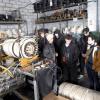
Екскурсії на виробництво є важливою складовою підготовки майбутніх фахівців: студенти ознайомлюються зі структурою підприємств, умовами та специфікою роботи на них, особливостями виробничого процесу, інноваційними технологіями та обладнанням, спілкуються з кваліфікованими спеціалістами.
Pages




![[link]](https://i.redd.it/mm0g8h3phl3g1.png)
![[link]](https://i.redd.it/01tsb4knij3g1.jpeg)
![[link]](https://i.redd.it/cuinnpy0og3g1.jpeg)