


Feed aggregator
HKUST develops record-efficiency red quantum rod LEDs
Адаптаційні курси: для кого, для чого, і що на них вивчають

"Адаптуйся до університетських програм, підтягни фундаментальні знання та склади свою першу сесію без стресу разом із курсами від Київської політехніки". Таке оголошення було розміщено на університетському сайті на початку осені. Насправді, подібні оголошення з'являються на цьому ресурсі щороку, бо потреба в адаптації першокурсників до навчання в університеті виникла не сьогодні.
Navitas announces private placement of common stock for proceeds of $100m
Вітаємо команду ІСЗЗІ із здобуттям срібла на престижних кіберзмаганнях!
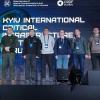
3–4 листопада, у межах Першого Міжнародного київського форуму із захисту критичної інфраструктури України, відбувся хакатон, на якому наша команда посіла почесне друге місце.
How AI Is Powering the Road to Level 4 Autonomous Driving
Courtesy: Nvidia
When the Society of Automotive Engineers established its framework for vehicle autonomy in 2014, it created the industry-standard roadmap for self-driving technology.
The levels of automation progress from level 1 (driver assistance) to level 2 (partial automation), level 3 (conditional automation), level 4 (high automation) and level 5 (full automation).
Predicting when each level would arrive proved more challenging than defining them. This uncertainty created industry-wide anticipation, as breakthroughs seemed perpetually just around the corner.
That dynamic has shifted dramatically in recent years, with more progress in autonomous driving in the past three to four years than in the previous decade combined. Below, learn about recent advancements that have made such rapid progress possible.
What Is Level 4 Autonomous Driving?
Level 4 autonomous driving enables vehicles to handle all driving tasks within specific operating zones, such as certain cities or routes, without the need for human intervention. This high automation level uses AI breakthroughs including foundation models, end-to-end architectures and reasoning models to navigate complex scenarios.
Today, level 4 “high automation” is bringing the vision of autonomous driving closer to a scalable, commercially viable reality.
Six AI Breakthroughs Advancing Autonomous Vehicles
Six major AI breakthroughs are converging to accelerate level 4 autonomy:
- Foundation Models
Foundation models can tap internet-scale knowledge, not just proprietary driving fleet data.
When humans learn to drive at, say, 18 years old, they’re bringing 18 years of world experience to the endeavour. Similarly, foundation models bring a breadth of knowledge — understanding unusual scenarios and predicting outcomes based on general world knowledge.
With foundation models, a vehicle encountering a mattress in the road or a ball rolling into the street can now reason its way through scenarios it has never seen before, drawing on information learned from vast training datasets.
- End-to-End Architectures
Traditional autonomous driving systems used separate modules for perception, planning and control — losing information at each handoff.
End-to-end autonomy architectures have the potential to change that. With end-to-end architectures, a single network processes sensor inputs directly into driving decisions, maintaining context throughout. While the concept of end-to-end architectures is not new, architectural advancements and improved training methodologies are finally making this paradigm viable, resulting in better autonomous decision-making with less engineering complexity.
- Reasoning Models
Reasoning vision language action (VLA) models integrate diverse perceptual inputs, language understanding, and action generation with step-by-step reasoning. This enables them to break down complex situations, evaluate multiple possible outcomes and decide on the best course of action — much like humans do.
Systems powered by reasoning models deliver far greater reliability and performance, with explainable, step-by-step decision-making. For autonomous vehicles, this means the ability to flag unusual decision patterns for real-time safety monitoring, as well as post-incident debugging to reveal why a vehicle took a particular action. This improves the performance of autonomous vehicles while building user trust.
- Simulation
With physical testing alone, it would take decades to test a driving policy in every possible driving scenario, if ever achievable at all. Enter simulation.
Technologies like neural reconstruction can be used to create interactive simulations from real-world sensor data, while world models like NVIDIA Cosmos Predict and Transfer produce unlimited novel situations for training and testing autonomous vehicles.
With these technologies, developers can use text prompts to generate new weather and road conditions, or change lighting and introduce obstacles to simulate new scenarios and test driving policies in novel conditions.
- Compute Power
None of these advances would be possible without sufficient computational power. The NVIDIA DRIVE AGX and NVIDIA DGX platforms have evolved through multiple generations, each designed for today’s AI workloads as well as those anticipated years down the road.
Co-optimization matters. Technology must be designed anticipating the computational demands of next-generation AI systems.
- AI Safety
Safety is foundational for level 4 autonomy, where reliability is the defining characteristic distinguishing it from lower autonomy levels. Recent advances in physical AI safety enable the trustworthy deployment of AI-based autonomy stacks by introducing safety guardrails at the stages of design, deployment and validation.
For example, NVIDIA’s safety architecture guardrails the end-to-end driving model with checks supported by a diverse modular stack, and validation is greatly accelerated by the latest advancements in neural reconstruction.
Why It Matters: Saving Lives and Resources
The stakes extend far beyond technological achievement. Improving vehicle safety can help save lives and conserve significant amounts of money and resources. Level 4 autonomy systematically removes human error, the cause of the vast majority of crashes.
NVIDIA, as a full-stack autonomous vehicle company — from cloud to car — is enabling the broader automotive ecosystem to achieve level 4 autonomy, building on the foundation of its level 2+ stack already in production. In particular, NVIDIA is the only company that offers an end-to-end compute stack for autonomous driving.
The post How AI Is Powering the Road to Level 4 Autonomous Driving appeared first on ELE Times.
Revolutionizing System Design with AI-Powered Real-Time Simulation
Courtesy: Cadence
The rising demand for AI infrastructure is driving faster innovation and smarter resource utilization throughout the design lifecycle. Accelerated computing shortens design and simulation cycles, streamlines workflows, and amplifies human creativity through data-driven insights. Together, AI and accelerated computing empower engineers to explore ideas in real time and bring their visions to life. Cadence, with its GPU-accelerated Cadence Fidelity CFD Software, collaborated with NVIDIA to generate high-fidelity simulation data for airframe simulations, generating thousands of simulations in the span of weeks using NVIDIA GB200, available through the Cadence Millennium M2000 AI Supercomputer. This was followed by using NVIDIA PhysicsNeMo, an AI physics framework, to train a physics-accurate AI surrogate model for a digital twin that provides interactive what-if design changes and analyses for aircraft design.
This breakthrough in real-time simulation is a powerful example of the Cadence strategy for innovation, “The Three Layer Cake,” in action. This strategic framework unifies Cadence’s technology stack and drives our solutions. At the foundation is accelerated compute, exemplified by the Millennium M2000 AI Supercomputer, built with NVIDIA Blackwell systems. In the middle is Cadence’s Fidelity CFD Software, enabling high-fidelity, physics-based modeling of the system under design. At the top sits AI, where frameworks like NVIDIA PhysicsNeMo and Cadence’s AI-driven design intelligence transform simulation data into interactive, predictive digital twins. Combined, these layers form a cohesive platform that empowers engineers to design, simulate, and optimize complex systems faster and more intelligently than ever before. A demonstration of the technology shows real-time airframe performance simulation while varying the design configuration. Other applications, including automotive aerodynamics or aeroacoustics, 3D-IC thermal and electromagnetic analysis, and data center thermal analysis, are possible.
How AI for Physics Is Transforming Engineering Design?
Computational fluid dynamics (CFD) is a cornerstone of modern engineering. It allows designers to simulate the flow of fluids—like air over a plane’s wings or fuel through an engine—to predict performance, identify issues, and optimize designs. However, traditional CFD methods are incredibly resource-intensive. Historically, running a single high-fidelity simulation on conventional computing systems can take days or even weeks, limiting the number of design iterations engineers can perform. Applying AI technology speeds the calculations and turnaround time, making real-time what-if design analysis practical.
High-quality results from AI are dependent on accurate and representative training data, in sufficient quantities. The availability of such data for computational engineering purposes is relatively limited in comparison to typical data used to train foundational AI models. In this example, the Cadence Fidelity CFD Software, accelerated on the Millennium M2000 AI Supercomputer, produced the high-quality dataset for the NVIDIA PhysicsNeMo framework. Thousands of detailed, time-dependent simulations were computed in a matter of weeks, with each simulation comprising hundreds of millions of degrees of freedom. This volume of high-quality data, generated from the design itself, is critical to being able to trust the AI’s predictions.
The collaboration between NVIDIA and Cadence addresses these challenges head-on. By leveraging GPU acceleration and AI, this integrated solution fundamentally changes the speed and scale of engineering simulation.
Cadence and NVIDIA Transform Aerospace and Automotive Design with AI Physics
NVIDIA is unveiling ground-breaking advancements in AI-powered simulation, transforming aerospace and automotive design with up to 500X faster engineering workflows. Cadence is at the forefront of this transformation, leveraging its Fidelity CFD Software with the Millennium M2000 AI Supercomputer built on NVIDIA Blackwell to empower aerospace leaders. By combining high-fidelity Multiphysics simulations with modern accelerated computing, Cadence enables rapid design iteration, enhanced efficiency, and optimized performance for next-generation systems. Together, Cadence and NVIDIA are accelerating innovation and redefining the future of computational engineering.
Shaping the Future of AI Infrastructure
NVIDIA has unveiled the NVIDIA AI Factory Research Center in Virginia, designed to leverage the NVIDIA Vera Rubin platform and NVIDIA DSX blueprint to enable gigawatt-scale AI factory design and development.
To ensure design precision and operational excellence, Cadence is developing a high-fidelity digital twin of the facility through its Reality DC Platform. This platform, integrated with NVIDIA Omniverse libraries, provides a physics-based simulation environment that allows engineers to model thermal, energy, and airflow dynamics across the entire infrastructure—from chip to chiller. By combining computational fluid dynamics (CFD) and Multiphysics analysis, the Cadence Reality DC Platform empowers teams to explore design configurations, predict failure scenarios, and optimize performance before physical implementation.
Together, these innovations pave the way for smarter, more sustainable data center designs—accelerating the journey toward the next generation of AI-powered infrastructure.
The post Revolutionizing System Design with AI-Powered Real-Time Simulation appeared first on ELE Times.
Microchip Technology Expands its India Footprint with a New Office Facility in Bengaluru
Microchip Technology has expanded its India footprint with the acquisition of 1.72 lakh square feet (16,000 square meters) of premium office space at the Export Promotion Industrial Park (EPIP) Zone in Whitefield, Bengaluru. This move highlights the company’s continued focus on strengthening its engineering and design capabilities in the region.
The facility will serve as a strategic extension of Microchip’s Bengaluru Development Center that can easily accommodate over 3,000 employees in the next 10 years. It is designed to support the company’s growing workforce and future hiring plans, encourage stronger collaboration across global and regional teams, and provide them with modern infrastructure for advanced research and development.
Talking on the new acquisition, Srikanth Settikere, vice president and managing director of Microchip’s India Development Center stated, “At Microchip, growth is about creating opportunities as much as scaling operations. With India contributing to nearly 20% of global semiconductor design talent, our new Bengaluru facility will sharpen our advanced IC design focus and strengthen our engagement in one of the country’s most dynamic technology hubs.”
Steve Sanghi, President and CEO of Microchip added, “We recently celebrated Microchip’s 25th anniversary in India and this office acquisition is a testament to our commitment in India. We believe our investments in the region will enable us to both benefit from and contribute to the country’s increasingly important role in the global semiconductor industry.”
The Bengaluru acquisition is Microchip’s second facility in Bengaluru besides its physical presence in Hyderabad, Chennai, Pune and New Delhi, reinforcing its long-term commitment to product development, business enablement and talent growth in India. With this expansion, the company further positions itself to deliver innovative semiconductor solutions across industrial, automotive, consumer, aerospace and defense, communications and computing markets.
The post Microchip Technology Expands its India Footprint with a New Office Facility in Bengaluru appeared first on ELE Times.
Finally wired the tp4056 to my controller
 | Ayo guys this is follow up on my post 10 days ago about changing the micro usb port on third party controller so I finally got thr tp4056 and did lots of soldering and sanding t the shell of the controller but couldn't tget it to stay inside so it's gonna be external as i use it only once in a while😅 [link] [comments] |
PCB I got out of a Roomba from 2015
 | submitted by /u/CIemson [link] [comments] |
Old Chips Found During Cleanup
 | Amazing how you can have spare parts sit in draws for 25 years untouched. I'm a fan of AMD so I was excited to find two of these are from them. I'm wishing I had a better microscope to de-cap and view the die. I'll have to figure out how to see if Evil Monkeyz Designz is interested in any of these for a de-capping. Parts Shown Above: [link] [comments] |
Built a desktop PSU from junk I found in the hostel.
 | I mean atleast it didn't blow up... I really should've gotten a pcb... [link] [comments] |
Weekly discussion, complaint, and rant thread
Open to anything, including discussions, complaints, and rants.
Sub rules do not apply, so don't bother reporting incivility, off-topic, or spam.
Reddit-wide rules do apply.
To see the newest posts, sort the comments by "new" (instead of "best" or "top").
[link] [comments]
When there are no switches big enough but still want to launch the project.
 | I need a switch that can handle some power and don't have the patiance to wait for it from shipping, so what do we do? We take out the key ignition with bonus volt meter that's ment for escooter to be able to start it and shut it off with a key. [link] [comments] |
📰 Газета "Київський політехнік" № 39-40 за 2025 (.pdf)

Вийшов 39-40 номер газети "Київський політехнік" за 2025 рік
EEVblog 1719 - 75kWh Home Storage Battery Expansion!
Identically rated capacitors from the 80s to now
 | Recapping an Apple IIe and the size difference blew me away. [link] [comments] |
Gold leg earrings I made from electronic components
 | submitted by /u/Independent-Gazelle6 [link] [comments] |
Power pole collapse

Two or three days ago, as of this writing, there was a power pole collapse in Bellmore, NY, at the intersection of Bellmore Avenue and Sunrise Highway. The collapsed pole is seen in Figure 1, lying across two westbound lanes of Sunrise Highway. The traffic lights are dark.
 Figure 1 Collapsed power pole in Bellmore, NY, temporarily knocking out power.
Going to Google Maps, I took a close look at a photograph of the collapsed pole taken three months earlier, back in July, when the pole was still standing (Figure 2).

Figure 2 The leaning power pole and its damaged wood in July 2025.
The wood at the base of the leaning power pole was clearly, obviously, and indisputably in a state of severe decrepitude.
An older picture of this same pole on Google Maps, taken in December 2022 (Figure 3), shows this pole to have been damaged even at that time. Clearly, the local power utility company had, by inexcusable neglect, allowed that pole damage to remain unaddressed, which had thus allowed the collapse to happen.

Figure 3 Google Maps image of a power pole showing damage as early as December 2022.
Sunrise Highway is an extremely busy roadway. It is only by sheer blind luck that nobody was injured or killed by this event.
A replacement pole was later installed where the old pole had fallen. The new pole’s placement is exactly vertical, but how many other power poles out there are in a similarly unsafe condition as that fallen pole in Bellmore had been?
John Dunn is an electronics consultant and a graduate of The Polytechnic Institute of Brooklyn (BSEE) and of New York University (MSEE).
Related Content
- A tale about loose cables and power lines
- Shock hazard: filtering on input power lines
- Why do you never see birds on high-tension power lines?
- Misplaced insulator proves fatal
- Ground strikes and lightning protection of buried cables
The post Power pole collapse appeared first on EDN.
Photon Design taking PCSEL simulation solution to PCSEL 2025 workshop
Сучасний стан системи забезпечення якості вищої освіти в Україні: виклики та перспективи

КПІ ім. Ігоря Сікорського став партнером та майданчиком для проведення регіонального семінару НАЗЯВО «Сучасний стан системи забезпечення якості вищої освіти в Україні: виклики та перспективи»
Pages




![[link]](https://i.redd.it/swovzeiyb40g1.jpeg)
![[link]](https://i.redd.it/dqazwvzrsvzf1.jpeg)