


Збирач потоків
Neuromorphic Engineering & Edge AI: The Future of Intelligent Computing
Artificial Intelligence is rapidly transforming industries, but traditional AI systems come with a major challenge: enormous energy consumption. Most modern AI applications depend on cloud-based data centers packed with power-hungry GPUs and servers. As billions of smart devices become connected, this centralized approach is becoming increasingly expensive, slower, and environmentally unsustainable.
A revolutionary solution is emerging through Neuromorphic Engineering and Edge AI. Instead of relying entirely on distant cloud servers, scientists and engineers are building specialized chips that mimic the structure and behavior of the human brain. These advanced processors, known as neuromorphic chips and AI accelerators, process information directly on devices such as smartphones, drones, medical wearables, robots, and autonomous vehicles. This approach dramatically reduces latency, improves privacy, and cuts energy consumption.
What is Neuromorphic Engineering?
Neuromorphic engineering is a field that designs computer hardware inspired by biological neural systems. Traditional computers process data sequentially and continuously, even when there is little meaningful activity. The human brain, however, operates differently. Neurons only “fire” when necessary, making the brain remarkably energy efficient while handling complex sensory information in real time.
Neuromorphic chips attempt to replicate this behavior using Spiking Neural Networks (SNNs). Unlike conventional neural networks that constantly process streams of data, SNNs activate only when changes occur. This event-driven architecture significantly reduces unnecessary computation and power usage.
Brain-Inspired AI Hardware
Modern neuromorphic processors integrate memory and computing together instead of separating them like traditional CPU and GPU architectures. This eliminates the “von Neumann bottleneck,” where large amounts of energy are wasted transferring data between memory and processors.
Companies and research institutions worldwide are developing advanced neuromorphic systems. Intel’s Loihi 2 chip, for example, can simulate millions of neurons while consuming only a fraction of the energy used by traditional AI hardware. Some experimental chips operate in milliwatts rather than watts, making them ideal for portable and battery-powered devices.
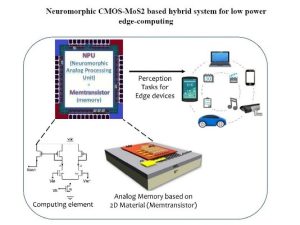
Researchers are also exploring technologies such as memristors, which combine memory and processing in a single component, closely resembling biological synapses. These innovations could eventually enable AI systems that learn continuously and adapt in real time without relying on cloud computing.
The Rise of Edge AI
Edge AI refers to running artificial intelligence directly on local devices rather than sending data to centralized servers. Today, many AI applications depend on cloud infrastructure, which introduces delays and requires constant internet connectivity. Edge AI changes this model by bringing intelligence closer to the source of data.
For example:
- Self-driving cars must make decisions instantly without waiting for cloud responses.
- Smart surveillance cameras need real-time object recognition.
- Wearable healthcare devices must continuously monitor vital signs with minimal battery drain.
- Industrial robots require rapid reactions in manufacturing environments.
Neuromorphic processors are particularly well-suited for these applications because they deliver near-zero latency and ultra-low power consumption.
Energy Efficiency and Sustainability
One of the biggest advantages of neuromorphic computing is energy efficiency. Conventional AI training and inference systems consume massive amounts of electricity. Data centers supporting generative AI models now require enormous cooling systems and power grids. Neuromorphic systems dramatically reduce this burden. According to recent studies, some neuromorphic architectures can achieve over 100 times better energy efficiency compared to traditional deep learning hardware.
The human brain itself consumes only about 20 watts of power — less than a dim light bulb — while performing tasks that remain challenging for modern computers. Neuromorphic engineers aim to approach this extraordinary level of efficiency. This has major implications for sustainable computing. As global AI adoption accelerates, reducing energy demand will become essential for lowering operational costs and minimizing environmental impact.
Real-World Applications
Neuromorphic Edge AI is already finding applications across multiple industries:
Healthcare
Wearable devices powered by neuromorphic chips can continuously monitor patient conditions, detect abnormalities, and even predict medical emergencies with minimal battery usage.
Autonomous Vehicles
Self-driving systems require split-second decisions. Neuromorphic processors enable rapid sensor processing for safer navigation and collision avoidance.
Robotics
Robots equipped with brain-inspired AI can react more naturally to changing environments while consuming far less energy.
Defense and Aerospace
Low-power edge computing is critical for drones, radar systems, and satellites operating in remote environments.
Consumer Electronics
Future smartphones, AR glasses, and smart home devices may run advanced AI locally without depending heavily on cloud services.
Challenges Ahead
Despite its promise, neuromorphic computing is still in its early stages. Developing efficient training methods for spiking neural networks remains difficult, and software ecosystems are less mature than traditional AI frameworks. Manufacturing specialized hardware at scale is another challenge. However, rapid advances in semiconductor technology and growing demand for sustainable AI are accelerating innovation in this field.
Conclusion
Neuromorphic Engineering and Edge AI represent a major shift in the future of computing. By mimicking the brain’s architecture, these technologies enable intelligent devices that are faster, smarter, and far more energy efficient than traditional systems. As AI continues to expand into every aspect of daily life, neuromorphic chips could become the foundation for a new generation of sustainable, low-latency, and autonomous technologies. The future of AI may no longer reside solely in giant cloud data centers — it may live directly inside the devices we use every day.
The post Neuromorphic Engineering & Edge AI: The Future of Intelligent Computing appeared first on ELE Times.
Ensuring Reliable AI in Safety-Critical Systems: Challenges and Engineering Solutions
In safety-critical environments, reliability is paramount, and errors have immediate, real-world consequences. If an autonomous system falters in urgent decisions, a clinical support tool misguides diagnoses, or an industrial controller fails in hazardous conditions, the results can be life-threatening. Artificial intelligence must be unwaveringly accurate and reliable at every moment to ensure safety and maintain trust in deployment.
This demands a fundamental shift in AI system engineering. Unlike traditional domains, where model accuracy or benchmark performance may suffice, safety-critical applications require predictable, consistent, and fail-aware behaviour across diverse conditions. The real challenge is to establish AI as fundamentally trustworthy in situations where failure is not an option, making reliability, not just intelligence, the core success criterion.
As AI integrates into mission-critical infrastructure, reliability is not just a technical requirement; it is the foundation and defining goal for deploying AI in safety-critical systems.
The Reliability Gap: From Probabilistic Models to Deterministic ExpectationsA core engineering challenge now demands urgent attention: a deep mismatch exists between traditional system design and modern AI behaviour. Safety-critical systems have historically been deterministic, producing predictable and verifiable outputs. In stark contrast, AI models are inherently probabilistically trained on data, influenced by variability, and alarmingly sensitive to environmental changes.
This mismatch creates a reliability gap that cannot be ignored in high-stakes deployments:
- High accuracy does not ensure safe behaviour in rare or unseen scenarios
- Models may generate confident yet incorrect predictions
- Behaviour under edge conditions remains difficult to anticipate
In safety-critical contexts, such uncertainties quickly become intolerable. Systems must now be engineered not just for performance, but for rigorous assurance under uncertainty. As Sundar Pichai warned, “The more capable AI becomes, the more critical it is to ensure it behaves safely and predictably.” This is no longer a theoretical challenge; it is the defining engineering crisis of our time.
Core Challenges in Deploying Reliable AI SystemsThe dynamic nature of real-world environments directly undermines reliability. AI systems trained in controlled settings inevitably confront distribution shifts at deployment scenarios absent from training data. These shifts degrade performance, especially in rare or safety-critical contexts.
In addition to distribution shifts, another critical issue is the inability of many models to communicate uncertainty. AI systems often produce outputs with high confidence, even when operating outside their domain of competence. In applications involving autonomous control or real-time decision-making, such overconfidence can lead to unsafe outcomes without warning.
Building on the previous concern, explainability is equally important. Safety-critical systems demand traceability and accountability, yet many AI models function as opaque decision-makers. Without the ability to interpret decisions, validating system behaviour and meeting regulatory expectations becomes significantly more difficult.
Finally, AI systems do not operate in isolation. They are part of a broader ecosystem involving sensors, embedded hardware, and control systems. Variability at any of these levels, whether due to sensor noise, latency, or hardware constraints, can influence overall system reliability. Ensuring dependable operation, therefore, requires a holistic, system-level perspective.
When AI Fails: Understanding System-Level RiskFailures in safety-critical AI systems are rarely isolated events. A single incorrect output can propagate across the system, leading to cascading effects that compromise overall functionality.
The most critical risks include:
- Silent failures, where incorrect outputs remain undetected
- Error propagation across interconnected system components
- Over-reliance on AI outputs, reducing effective human oversight
These risks highlight a key engineering principle: reliability must be designed into the system from the outset. It cannot be treated as a post-deployment evaluation metric.
Engineering Reliable AI: From Models to SystemsWe must shift from model-centric development to system-level assurance to address these challenges. We need to embed reliability across the entire lifecycle, from data collection to deployment and monitoring.
A foundational step is robust data engineering. Expand datasets to capture real-world variability. Simulate edge-case scenarios. Continuously monitor for data drift. These approaches improve generalisation and reduce unexpected system behaviour.
Equally important is uncertainty-aware system development. Integrate mechanisms that estimate prediction confidence so that models detect when they exceed their limits. This enables fallback strategies, like deferring to human operators or switching to safe modes. In this way, AI evolves from static prediction to self-aware system components.
Validation methodologies must also evolve. Traditional testing approaches are insufficient for capturing the complexity of AI behaviour. Scenario-based testing, simulation of rare or hazardous conditions, and stress testing under extreme inputs are becoming essential tools for evaluating reliability beyond standard datasets.
Explainability strengthens system assurance. While full transparency is rare, interpretable insights enable debugging, validation, and regulatory compliance. These capabilities help build trust among stakeholders.
Redundancy plays a central role in ensuring reliability. Instead of relying on a single model, systems increasingly incorporate multiple validation layers, hybrid architectures combining AI with rule-based logic, and predefined fail-safe states. As Satya Nadella emphasises, “Trust must be built into every layer of AI systems.” Redundancy ensures that this trust does not depend on a single point of failure.
System-Level Assurance: Beyond the AlgorithmA key realisation in modern engineering is that AI reliability cannot be isolated to the model alone. True assurance requires coordination across the entire system stack, including data pipelines, inference mechanisms, hardware platforms, and control logic.
This has led to the emergence of hardware-software co-design, where AI models are optimised alongside the systems that execute them. In this paradigm, reliability becomes a property of the entire system rather than an attribute of the algorithm alone.
Industry Perspective: Measured Adoption in High-Stakes DomainsAI adoption in safety-critical industries is cautious, driven by the persistent gap between experimental results and proven, production-level reliability.
Organisations are prioritising validation, risk mitigation, and incremental integration over rapid deployment. Hybrid approaches combining AI capabilities with deterministic safeguards are becoming increasingly common, reflecting the need to balance innovation with operational safety.
Regulatory and Certification ChallengesRegulatory frameworks for safety-critical systems were originally designed for deterministic software. Applying these frameworks to AI introduces significant challenges, particularly in verifying non-deterministic behaviour and defining acceptable risk thresholds.
The absence of standardised validation methodologies further complicates certification processes. As a result, the industry is moving toward new assurance models that emphasise transparency, traceability, and continuous validation throughout the system lifecycle.
Future Outlook: Toward Assured and Certifiable AIThe future of AI in safety-critical systems demands convergence. Data-driven intelligence will be fused with rule-based safeguards, and machine learning models will be integrated decisively with formal verification techniques.
Building on this convergence, continuous monitoring and adaptive system design will decisively enhance reliability, ensuring systems respond dynamically to changing conditions. We will deliver not just intelligent systems, but AI that is verifiably safe and certifiable for deployment.
As Jensen Huang states, “AI is advancing rapidly, but reliability and safety must scale with it.” This balance will define the next phase of AI engineering.
Conclusion: Reliability as the Foundation of Trustworthy AIAs AI expands into safety-critical domains, the definition of success is being redefined. Performance alone is no longer sufficient. Systems must demonstrate predictable behaviour under uncertainty, transparency in decision-making, and resilience in the face of failure.
AI must be engineered as a dependable system component, fully integrated into a broader safety and assurance framework. In this evolving landscape, reliability is not an added feature; it is the foundation upon which trust is built.
The trajectory of AI in safety-critical systems hinges not just on intelligence, but on how reliably these systems earn trust when it matters most.
The post Ensuring Reliable AI in Safety-Critical Systems: Challenges and Engineering Solutions appeared first on ELE Times.
Nanometer Nanotubes for Future Electronics
Researchers in Japan creates the world’s smallest semiconducting nanotubes, structures 100,000 times thinner than a human hair. By growing molybdenum disulfide inside protective tubes of boron nitride, researchers, including those from the University of Tokyo, produce highly uniform tubes just 1 nanometer wide, a scale at which it’s difficult to make stable nanotube structures. The work confirms decades-old theoretical predictions about how these ultrafine materials behave and could also provide a new route toward miniaturized electronic devices.
A few years back, carbon nanotubes were attracting a lot of press attention. But there’s a new contender in the ring, and it offers some advantages over its carbon counterpart that could tempt engineers to design products around it. Molybdenum disulfide (MoS2) nanotubes, though still experimental in nature, point to applications in semiconductor electronics, high-resolution sensing, and quantum-scale physics research.
“We achieved the synthesis of atomically precise semiconducting nanotubes with nanometer diameters. The coaxial structure, where a semiconducting MoS2 nanotube is surrounded by an insulating boron nitride (BN) nanotube, is attractive for gate-all-around transistors, one of the most advanced transistor architectures,” said Associate Professor Yusuke Nakanishi from the Department of Advanced Materials Science at the University of Tokyo. “Our paper demonstrates a way for structural control of inorganic semiconducting nanotubes at the atomic scale. And we experimentally demonstrated that the bandgap (related to how materials work as semiconductors) of the nanotubes decreases as their diameters become smaller, in agreement with theoretical predictions proposed more than a quarter century ago.”
Conventional methods for producing nanotubes are usually limited to diameters above 10 nanometers, multiwall concentric tubes, and poorly controlled or irregular atomic structures. Nakanishi and his team synthesized 1-nanometer-wide, single-wall MoS2 nanotubes with well-defined atomic structures. It manages the use of chemical reactions inside the narrow space of BN nanotubes. The confined space constrains the MoS2 nanotubes, which would otherwise be difficult to form, and promotes well-defined atomic arrangements, essential for engineered applications.
“In nanotubes, even small structural differences can strongly affect their properties. If the structure can be precisely controlled, the properties are more consistent, which is essential for reliable and reproducible transistor performance. Their biggest advantage is atomic-level structural control,” said Nakanishi. “Current silicon transistors are typically made by etching bulk silicon, but it’s increasingly difficult to keep their structures perfect at smaller sizes, where defects have a big impact. Carbon nanotubes also face a challenge for transistor applications, since even tiny structural differences can change how they behave, including whether they act more like metals or semiconductors. Our nanotubes could offer a more reliable way to build ultrasmall semiconductor channels with consistent properties.”
Practical applications are likely still some years away, and important challenges remain before working transistor devices can be made. In particular, the team wishes to increase the nanotube length from the current limit of several hundred nanometers to around 1 micrometer (which is 1,000 nanometers, and one-thousandth of a millimeter). Another future direction relates to materials: The method could also enable other inorganic nanotubes, including magnetic and superconducting materials. The researchers hope the work will help expand nanotube science beyond carbon-based systems and open the door to a broader class of atomically accurate nanotube materials for research, sensing, and smaller, faster devices.
The post Nanometer Nanotubes for Future Electronics appeared first on ELE Times.
TIL about SLP - Substrate-Like PCB Technology
 | submitted by /u/1Davide [link] [comments] |
Progress V2 -> V3 on our Open Access Health Tracker
 | 4 months ago I shared the progress of our Open Access Health Tracker from V1 to V2. Today I wanted to share the progress from V2 to V3 on a schematic level. And it's massive. 3x3cm PCB, 3 meters of traces and maxing the capabilities of JLCPCB. Plus an additional 2-3 PCBs for sensors not shown. Next up SLP instead of PCB. [link] [comments] |
Weekly discussion, complaint, and rant thread
Open to anything, including discussions, complaints, and rants.
Sub rules do not apply, so don't bother reporting incivility, off-topic, or spam.
Reddit-wide rules do apply.
To see the newest posts, sort the comments by "new" (instead of "best" or "top").
[link] [comments]
Automatic turntable that I'm designing from scratch
 | I'm designing a fully-automatic turntable from scratch called the Statimatic STM-01, using: - A Teensy 4.1 - Stepper for tonearm elevation - Stepper for tonearm azimuth movement - Stepper for azimuth clutch - Demultiplexer, to split elevation/azimuth stepper signal - Multiplexer, to handle input buttons (like "play" or "pause") - Shift register, to handle output LED statuses The "turntable" part isn't finished yet (nor is the automatic movement), so I'm just using an AR-XA as the turntable for now. I like records, and I like making stuff, so I decided I wanted to make a turntable. I know it isn't practical, but hey, I'm having fun with it! Please excuse the absolute mess that is the wiring. It is open source, though I'm not sure if GitHub links count as self promotion, so I'll play it safe and leave that out. [link] [comments] |
Made my first 8-bit ALU in Logisim Evolution! Next steps: designing the rest of the CPU and then building it IRL on breadboards!
 | [group 4b][variant 4b] 0x0_ = MISC submitted by /u/_Favo_
Github repo with all docs and files: https://github.com/mrFavoslav/8bit-cpu-MESAx8 I'll be posting my progress here and on https://www.favoslav.cz/blog/ [link] [comments] |
EEVblog 1753 - Designing a 2000V Isolated Oscilloscope (Cleverscope)
EEVblog 1752 - Texas Instruments screwed up the NE5532
 | submitted by /u/1Davide [link] [comments] |
Сторінки




![[link]](https://i.redd.it/gzhe8f2bwp5h1.png)
![[link]](https://i.redd.it/vnmpbvpg3l5h1.png)