


Збирач потоків
Synopsys, COEP Tech University and CADFEM Establish Digital Twin and Multiphysics Lab in Pune
Synopsys, COEP Technological University and CADFEM India have setup the “Ansys Digital Twin & Multiphysics Lab” on the COEP campus, Pune to support advanced engineering education, research, and strengthen the industry-academia partnerships. This program holds huge significance in an ecosystem for automotive and electrical vehicle industry which utilizes the technologies for vehicle system’s product development and validation processes.
The laboratory was established as a part of Memorandum of Understanding (MoU) signed during the 2026 Symposium. It will provide students, researchers, and faculty members access to Ansys digital-twin technologies and advanced high-end multiphysics simulation tool that have been acquired by Synopsis. The lab will host industry training and certification, technical seminars and research.
Multiphysics simulation has a potential role in analysis of different physics domains in development process of the vehicle or component within EV industry. Engineers are able to investigate on battery thermals, electric motor efficiencies, power electronics functionality, structural strength, electromagnetic phenomenon and thermal management by simulation work-flows prior build physical prototype. Digital-twin methodology can create bridge between physics-based models and actual data taken from sensors and operation data so to monitor and predict system behaviours.
The post Synopsys, COEP Tech University and CADFEM Establish Digital Twin and Multiphysics Lab in Pune appeared first on ELE Times.
«Драйвова осінь» 2026

⛺️ У сквері "Сосновий" КПІ ім. Ігоря Сікорського відбувся традиційний фестиваль «Драйвова осінь» від туристичного клубу КПІ «Глобус».
India’s EV Component Industry Faces Technology Capability Gap as Imports Rise
India’s rapidly growing EV industry faces a capability gap in developing and producing high-technology components that can meet modern technology demands because about 80% of component manufacturers are small businesses built for traditional mechanical parts rather than advanced electronics and software. The capability gap involves areas such as batteries, power electronics, embedded software, advanced electronics, and system integration.
India is shifting more towards electric vehicles as its automotive supply chain expands. Original Equipment Manufacturer (OEM) sourcing of auto-components is expected to increase by 16% to 6.6 lakh crore by FY26 against components’ exports valued at around 2.1 lakh crore. However, import charges rise at a greater rate, with China covering about 36% of all the auto component imports India uses.
The capability challenge is particularly significant for small and medium-scale enterprises (MSMEs), which constitute almost 80% of Indian auto-parts producers. Though electronics, embedded software, advanced engineering, and system integration are key factors for competitiveness, a lesser than half the small and medium scale enterprises lack the capabilities required to develop and manufacture components as per the modern industry demands. Embedded software capability is estimated to be found in only 10% of domestic suppliers, whereas system integration, and product-development capabilities are around 14%.
The post India’s EV Component Industry Faces Technology Capability Gap as Imports Rise appeared first on ELE Times.
Indian Electronics Makers Turn to Aluminium as Rising Copper Costs Squeeze Margins
There is growing demand from Indian electronics manufacturers for alternatives to expensive copper such as aluminium, and a more widespread adoption of other cheaper materials due to increased cost pressure and lower profit margins as copper prices rocket. Companies are also encouraged to boost domestic procurement and re-engineer product and component designs to reduce dependence on these raw materials.
Copper is widely used across the electronics industry because of its electrical conductivity, robustness, and reliability. Due to recent surge in copper prices has increased manufacturing costs, creating challenges for companies especially those already facing a competitive market that might not be able to fully pass the rising input costs to consumers.
A recent report stated that the copper price has risen by around 45%, thereby decreasing manufacturers’ profit. Because of this, some Indian electronics manufacturers are now considering aluminium as an alternative to copper in applications whether it’s electrical, mechanical, and thermal properties are highly required to meet product specifications. Aluminium is being considered as a substitute of copper because it is lighter and cheaper.
The product design needs modification when using aluminium as a substitute to achieve performance comparable to that of copper. Using aluminium as a substitute for copper is not easy to practically implemented across all electronics applications. It is important for manufacturers to consider properties like electrical conductivity, thermal performance, resistance to corrosion, joining techniques, and product lifespan before adopting alternate materials.
The post Indian Electronics Makers Turn to Aluminium as Rising Copper Costs Squeeze Margins appeared first on ELE Times.
Pi-Ener-lite: Compact UPS with Fuel Gauge and RTC for Raspberry Pi Zero
Pi-Ener-lite is a compact UPS power supply designed by ACE design studio for the Raspberry Pi Zero. It connects to the board via 7 spring-loaded pogo pins, which handle both power delivery and data reading. The project integrates an 18650 battery, a CW2015 fuel gauge chip, and a DS1307 RTC chip, offering a complete uninterruptible power supply in a small footprint.
 View of the Pi-Ener-lite hardware
Operation is simple and reliable. When external power is lost, the system automatically switches to battery power. It also supports simultaneous charging and discharging, so you can use the Raspberry Pi Zero while the battery recharges. The whole setup is protected against overcharge, over-discharge, overcurrent, and short circuits.
Battery measurement and RTCThe CW2015 fuel gauge chip measures battery voltage and remaining capacity with ±2% accuracy. The DS1307 RTC chip, powered by a CR1220 coin cell, keeps time even when the main battery is removed. This combination makes Pi-Ener-lite a truly complete UPS for applications that require operational continuity.
Fuel gauge and RTC data are read over I2C, so you can access them easily from Python. The project includes Python examples and detailed documentation. An optional open-source 3D-printable case protects the entire system. Total cost is around $35.
Why choose Pi-Ener-litePi-Ener-lite is a compact UPS specifically for the Pi Zero. Unlike other solutions, it leaves the GPIO connector free, so you can attach other modules without issues. It also adds battery measurement and an RTC, two features often missing from DIY UPS builds. The open-source 3D-printable case adds versatility.
The project is designed for those who want a reliable backup power supply without taking up space. The board connects in seconds thanks to the spring-loaded pogo pins. The CW2015 fuel gauge lets you monitor remaining charge precisely, avoiding sudden shutdowns. If you need a professional solution for your Pi Zero, this project fits the bill.
- Connection via 7 spring-loaded pogo pins, no soldering
- 18650 battery with CW2015 fuel gauge for charge monitoring
- DS1307 RTC with CR1220 battery to keep time
- Protection against overcharge, over-discharge, overcurrent, and short circuits
- Open-source 3D-printable case
To build the project, you need an 18650 battery and a CR1220 coin cell. The rest of the components are already mounted on the board. If you want to power the system from a higher voltage, you can use a 12V DC-DC step-up converter to adapt the input. Alternatively, for industrial applications, consider a DC-DC converter with 36-48V input and 24V output.
Getting started with Pi-Ener-liteThe first step is to connect the board to the Raspberry Pi Zero via the pogo pins. Then install the drivers for the CW2015 and DS1307. Finally, write a simple Python script to read voltage and time. The project board includes ready-to-use examples.
If you want a more powerful system, you can pair Pi-Ener-lite with a Raspberry Pi 5. In that case, you must adapt the power supply, because the Pi 5 requires more current. For the Pi Zero, the solution works perfectly as is. The project is designed to be simple, compact, and reliable.
In conclusion, Pi-Ener-lite is a well-designed UPS with quality components and clear documentation. The ability to print a 3D case makes it even more versatile. If you’re looking for a backup power supply for your Raspberry Pi Zero, this project deserves attention.
The post Pi-Ener-lite: Compact UPS with Fuel Gauge and RTC for Raspberry Pi Zero appeared first on Open Electronics.
Pi-Ener-lite: Compact UPS with Fuel Gauge and RTC for Raspberry Pi Zero
Pi-Ener-lite is a compact UPS power supply designed by ACE design studio for the Raspberry Pi Zero. It connects to the board via 7 spring-loaded pogo pins, which handle both power delivery and data reading. The project integrates an 18650 battery, a CW2015 fuel gauge chip, and a DS1307 RTC chip, offering a complete uninterruptible power supply in a small footprint.
View of the Pi-Ener-lite hardware
Operation is simple and reliable. When external power is lost, the system automatically switches to battery power. It also supports simultaneous charging and discharging, so you can use the Raspberry Pi Zero while the battery recharges. The whole setup is protected against overcharge, over-discharge, overcurrent, and short circuits.
Battery measurement and RTCThe CW2015 fuel gauge chip measures battery voltage and remaining capacity with ±2% accuracy. The DS1307 RTC chip, powered by a CR1220 coin cell, keeps time even when the main battery is removed. This combination makes Pi-Ener-lite a truly complete UPS for applications that require operational continuity.
Fuel gauge and RTC data are read over I2C, so you can access them easily from Python. The project includes Python examples and detailed documentation. An optional open-source 3D-printable case protects the entire system. Total cost is around $35.
Why choose Pi-Ener-litePi-Ener-lite is a compact UPS specifically for the Pi Zero. Unlike other solutions, it leaves the GPIO connector free, so you can attach other modules without issues. It also adds battery measurement and an RTC, two features often missing from DIY UPS builds. The open-source 3D-printable case adds versatility.
The project is designed for those who want a reliable backup power supply without taking up space. The board connects in seconds thanks to the spring-loaded pogo pins. The CW2015 fuel gauge lets you monitor remaining charge precisely, avoiding sudden shutdowns. If you need a professional solution for your Pi Zero, this project fits the bill.
- Connection via 7 spring-loaded pogo pins, no soldering
- 18650 battery with CW2015 fuel gauge for charge monitoring
- DS1307 RTC with CR1220 battery to keep time
- Protection against overcharge, over-discharge, overcurrent, and short circuits
- Open-source 3D-printable case
To build the project, you need an 18650 battery and a CR1220 coin cell. The rest of the components are already mounted on the board. If you want to power the system from a higher voltage, you can use a 12V DC-DC step-up converter to adapt the input. Alternatively, for industrial applications, consider a DC-DC converter with 36-48V input and 24V output.
Getting started with Pi-Ener-liteThe first step is to connect the board to the Raspberry Pi Zero via the pogo pins. Then install the drivers for the CW2015 and DS1307. Finally, write a simple Python script to read voltage and time. The project board includes ready-to-use examples.
If you want a more powerful system, you can pair Pi-Ener-lite with a Raspberry Pi 5. In that case, you must adapt the power supply, because the Pi 5 requires more current. For the Pi Zero, the solution works perfectly as is. The project is designed to be simple, compact, and reliable.
In conclusion, Pi-Ener-lite is a well-designed UPS with quality components and clear documentation. The ability to print a 3D case makes it even more versatile. If you’re looking for a backup power supply for your Raspberry Pi Zero, this project deserves attention.
The post Pi-Ener-lite: Compact UPS with Fuel Gauge and RTC for Raspberry Pi Zero appeared first on Open Electronics.
Pi-Ener-lite: Compact UPS with Fuel Gauge and RTC for Raspberry Pi Zero
Automotive Electronics Could Account for 50–55% of Car Cost by 2030, Enhancing Localisation Opportunities
Electronics will make up 50% to 55% of a car’s total manufacturing cost by 2030, growing significantly from 30% to 35% in 2020, creating a growth opportunity for Indian automotive component manufacturers in high-value electronic systems, according to a recent report by the Boston Consulting Group (BCG) and the Automotive Component Manufacturers Association of India (ACMA).
As per the report, increasing adoption of ADAS, infotainment, connected vehicle technologies, sensors, and ECUs in both ICE and EV vehicles are driving higher content of electronics.
However, India’s electrical and electronics segment was expected to be around 12% of domestic component supply in FY2025, highlighting significant scope for localization. Indian suppliers could capture a share of this emerging value pool, while also developing new capabilities in automotive electronics and other associated technologies.
Some technologies such as sensors, Electronic Control Units (ECUs), power electronics, connectivity systems, and Battery Management Systems (BMS) are gaining more consumer attraction as cars evolve into software-defined and highly connected products.
To capture this localisation opportunity, Indian component manufacturers need to move beyond traditional mechanical and manufacturing capabilities. They need to invest more in engineering, research and development, electronics design, software, testing, and technology development to compete in advanced technology that can be easily adopted by consumer mature automotive supply chains.
The post Automotive Electronics Could Account for 50–55% of Car Cost by 2030, Enhancing Localisation Opportunities appeared first on ELE Times.
India Approves Industry Production of DRDO-Developed Missile Systems
The defence minister, Rajnath Singh, has authorized the transfer of technologies, including conventional missile systems developed by DRDO, to eligible Indian defence manufacturers to set up indigenous production. In this process, mature and proven missile technologies are being moved from development to industrial-level mass production. The manufacturers will need to have applicable technical qualifications, certification levels, and regulatory requirements in place.
The scope for wider participation in the missile production chain would occur to some extent also due to technology transfer, where state-owned manufacturers, private firms, MSMEs & specialized manufacturers could develop expertise and participate in components and sub-components, electronics, propellants, guidance systems and associated mechanisms, launch systems and integration with greater depth.
There is scope for increased industrial involvement, which could bring about a higher level of domestic production and value addition, thereby lowering defence imports reliance. Increased industrial involvement could enable DRDO labs to focus more on research in newer and advanced technologies, while existing and developed systems may be produced industrially. A drastic policy shift, as it marks a change in treating private Indian companies as long-term technology and production partners in defence manufacturing. Its success hinges on technological absorption capability, quality testing procedures, test facilities, and orders.
The post India Approves Industry Production of DRDO-Developed Missile Systems appeared first on ELE Times.
Indian Navy Commissions Indigenous Diving Support Vessel INS Nipun
The Indian Navy commissioned INS NIPUN, the second ‘Nistar’ class Diving Support Vessel (DSV), at the Naval Dockyard. Mumbai on 31st August 2026. This is considered a great boon to our Navy’s underwater diving, underwater intervention, and submarine rescue capabilities. The first-ever indigenously developed and built vessel designed and built at Hindustan Shipyard Ltd. Visakhapatnam has sophisticated underwater-diving facilities for personnel, capable of submergence in adverse environments and pressures of the high seas. It can perform tasks such as inspection, maintenance, salvage, among others while it stays at sea, far away from shore for long periods.
It will provide increased capabilities in support of submarine-rescue operations- a vital skill that will protect crews and response personnel in submerged situations. Vessels like this are used to embark divers, remote systems and specialist rescue gear to operate as afloat platforms.
Induction of INS Nipun showcases the growing Indian capacity in indigenous design and manufacture of complex naval platforms, and it further bolsters the overall defence-shipbuilding industry in India through the contribution of Indian shipyards, equipment providers & supporting industries. She makes inroads into the Navy at a time when underwater surveillance, operation of submarines, and security of sea-based infrastructure are assuming prime importance.
The post Indian Navy Commissions Indigenous Diving Support Vessel INS Nipun appeared first on ELE Times.
GRSE Expands Digital Shipbuilding Through New International Partnerships
Garden Reach Shipbuilders & Engineers has recently signed two international contracts to boost its digital shipbuilding and marine-engineering activities. Both contracts were signed on September 2, 2026, at SMM, the maritime trade fair that was held in Hamburg, Germany. The signing was completed when the Indian defence shipbuilder and the Norway-based classification and assurance organization DNV signed their first Memorandum of Understanding. The partnership is said to seek digital shipbuilding and development in areas of green technologies, training, and leading technical marine engineering.
GRSE further signed its second accord with the Netherlands-based Damen Technical Cooperation to provide technical and commercial cooperation for the design and construction of high-end dredges in India, reinforcing an existing relationship and boosting India’s capability to manufacture specific vessel types in the future. Digital shipbuilding encompasses the use of an interconnected design platform, data-centric engineering, and 3-D models for developing, constructing, and maintaining a vessel throughout its life cycle.
This process helps identify design challenges early in development and allows predicting maintenance needs on vessel parts. These joint ventures may facilitate GRSE in upgrading its shipyard, attaining foreign technology, and thereby increasing opportunities to participate in overseas tenders, along with augmenting India’s indigenous capabilities for construction of advanced warships and commercial ships.
The post GRSE Expands Digital Shipbuilding Through New International Partnerships appeared first on ELE Times.
Aero India 2027 Announced for February 8–12 in Bengaluru
The 16th edition of Aero India, the aerospace and defence manufacturing exhibition, is being organized by the Ministry of Defence from 8-12 February, 2027 at the Air Force Station Yelahanka in Bengaluru. Military officials, defence policy planners and policy formers, defence technology experts, as well as foreign investors are said to visit the show; the exhibition will aim to exhibit combat aircraft, helicopters, unmanned aerial systems, avionics, propulsion systems, electronic warfare and air defence technologies. The defence show of Aero India is managed by the Department of Defence Production. A flying display along with a technology exhibition will also be organized.
The event will also offer a platform for Indian defence manufacturing companies, start-ups, and MSMEs for forming manufacturing alliances and becoming an integral part of the global supply chains. The business meetings are anticipated to deliberate on technology transfer, co-development, co-production and defence exports. The announcement assumes significance at a time when India aims to give impetus to aerospace manufacturing indigenization and cut reliance on imports for its defence equipment needs. Aero India 2027 will hence not merely be an Air Show but a catalyst in enabling India’s Make in India, Make for the World defence manufacturing story.
The post Aero India 2027 Announced for February 8–12 in Bengaluru appeared first on ELE Times.
The 66th SIAM Annual Convention: PM Modi Wants Auto Industry to Augment ‘Viksit Bharat’
The 66th Annual Convention of The Society of Indian Automobile Manufacturers (SIAM) was recently held in New Delhi. Addressing the event, Indian PM Narendra Modi shared a special message at the convention. He stated, “India’s automobile industry is well placed to further expand its global presence as the country’s mobility ecosystem undergoes a fundamental transformation. Continued innovation, pursuit of excellence and a bold pathway towards Viksit Bharat will unlock transformative opportunities for the sector and accelerate the journey towards a faster, greener and self-reliant future.”
Chief Guest Nitin Gadkari, Hon’ble Union Minister of Road Transport & Highways, Government of India, mentioned, “With quality, innovation, research and competitive pricing, India has the potential to become the largest automobile industry in the world, with the sector playing a key role in Viksit Bharat. We should also encourage the expansion of driver training centres, vehicle fitness centres and vehicle scrapping centres, which can contribute to the economy as well.”
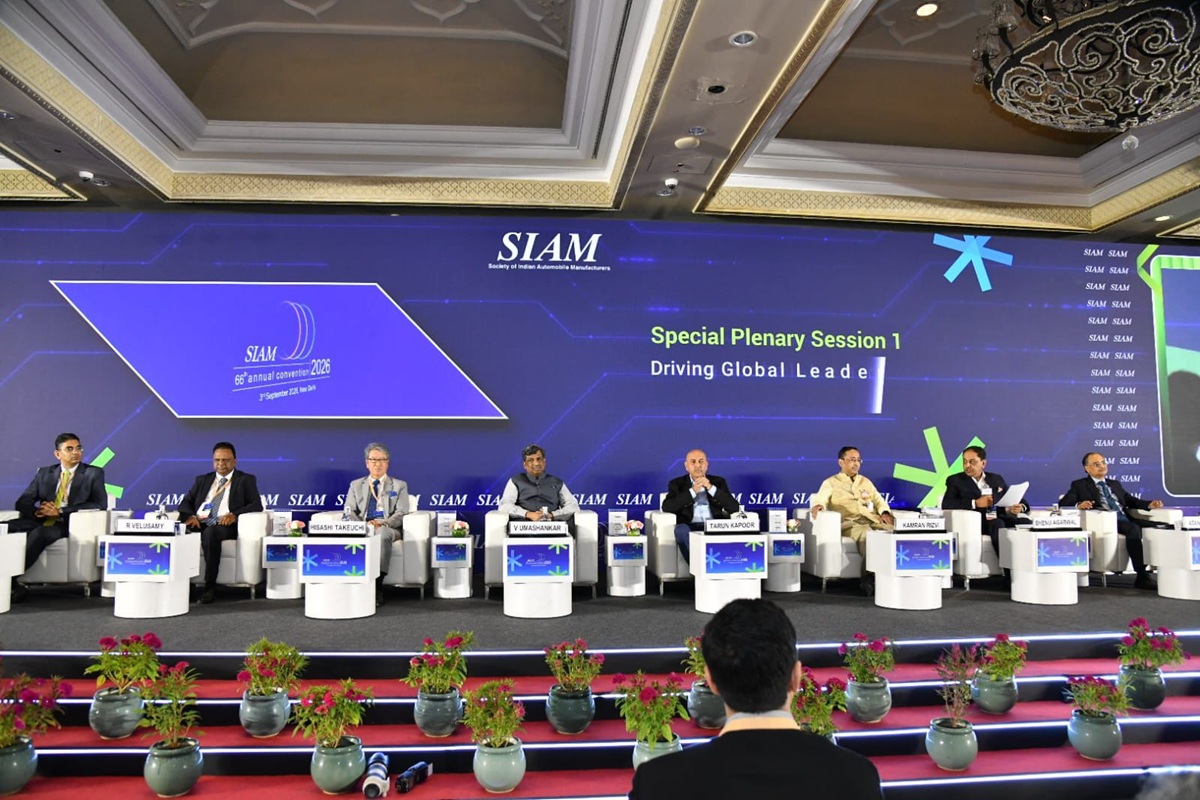
In a video message, Guest of Honour H. D. Kumaraswamy, Union Minister of Heavy Industries and Steel, Government of India, said, “The Indian automobile industry is strengthening its domestic capabilities and advancing vehicle technologies, creating a strong foundation to transform the local market into a global hub. The sector will continue to grow as a cleaner, more inclusive and globally competitive industry, contributing meaningfully to the Viksit Bharat 2047 goal.”
Riding on Indigenous Innovation at the SIAM Annual ConventionSharing his views, Shailesh Chandra, President, SIAM and Managing Director & CEO, Tata Motors Passenger Vehicle Ltd. added, “The Indian Automobile Industry continues to play a defining role in shaping India’s Amrit Kaal, contributing significantly to realising the vision of a Viksit Bharat by 2047. Alongside this progress, India has made significant strides in aligning with global and national priorities of sustainability, decarbonisation, and safety.”
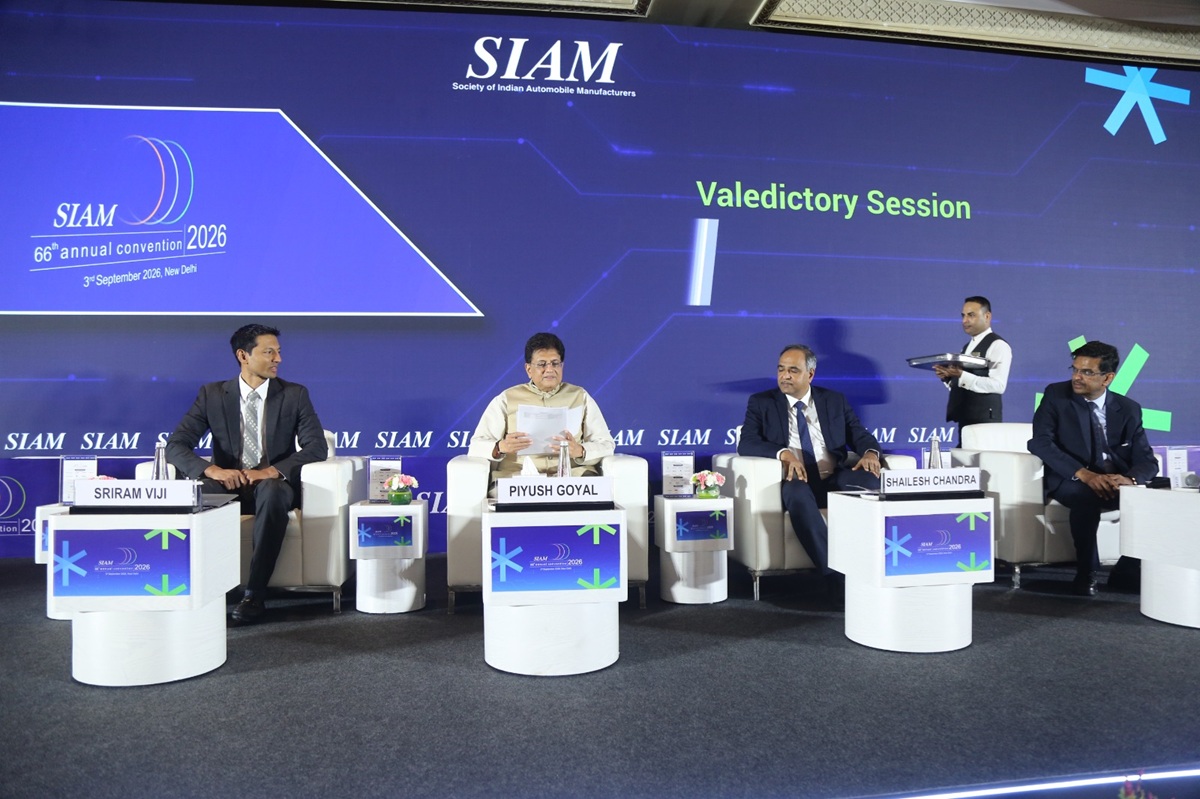
Addressing the automobile fraternity, Shenu Agarwal, Vice President, SIAM and Managing Director & CEO, Ashok Leyland Ltd., highlighted, “The Indian automobile industry has demonstrated remarkable resilience, and India can simultaneously become a large mobility market, a global manufacturing hub and a technology leader. But the next phase of this journey will require looking beyond growth alone, with sustainability and resilience going hand in hand.”
The SIAM Annual Convention session concluded with a shared commitment to building resilience in sustainable mobility, harnessing technology to strengthen global competitiveness and advancing India’s journey towards Viksit Bharat.
The post The 66th SIAM Annual Convention: PM Modi Wants Auto Industry to Augment ‘Viksit Bharat’ appeared first on ELE Times.
Modelithics releases Qorvo GaN Library v26.5.11
Modelithics releases Qorvo GaN Library v26.5.11
NUBURU expands directed-energy platform into law enforcement and public security across USA and NATO
NUBURU expands directed-energy platform into law enforcement and public security across USA and NATO
RF GaN patenting activity slowing as technology matures
RF GaN patenting activity slowing as technology matures
SonicFly: the drone that follows another drone using only sound
Сторінки