


Збирач потоків
Пам'яті Сергія Ігоровича Сікорського

Нещодавно у США не стало Сергія Ігоровича Сікорського — віцепрезидента зі спеціальних проєктів Sikorsky Aircraft, сина всесвітньо відомого авіаконструктора Ігоря Сікорського, на честь якого названий наш університет.
Armstrong’s Method of FM Generation
My Homemade Electromagnetic Accelerator Project
 | Hi everyone!, after 10 months of working and improving on my accelerator, its finally complete! This device accelerates a magnet in circles using 4 electromagnets and hall effect sensors (I've tried IR sensors but failed😔). Those sensors detect the magnet and then a N-MOSFET switches the coil on and off at the right moment, which leads to acceleration of the magnet. I've also used a 12v--> 5v voltage regulator and for one reason or another I've put a quick ignition and fire hazard or whatever you call it on the voltage regulator. If you wanna know more, or just wanna see the accelerator in action you find the youtube video at the KIWIvolt youtube channel. I'm thinking to make a part 2 in which the magnet is a sphere and thinking of replacing the breadboard with a PCB. If you have any other ideas or wishes please let me know so i can adjust it, to perfect my accelerator even further. [link] [comments] |
Keyboard upgrade from USB to BLE with an ESP32
 | submitted by /u/avionic_Railcar [link] [comments] |
I made a counter with a 8-stage serial shift register
 | So i used HEF4094BP, i did the same circuit in this video 4094 shift register long time ago, then in 2022 i bought raspberry pi pico, and in this year i write a long code with MicroPython to count from 1 to 9 and repeat the loop, but i need to optimise it next time. [link] [comments] |
3D Magnetometer Project.
 | Over the last few weeks I’ve worked on an Arduino board connected through an ADC converter into 3 magnetometers. They are set orthogonally to one another (around the clear box) so that the magnetic field strength and direction at a given point can be found. The whole lot gets power through a USB cable that allows you to model the direction and strength in python. It’s been an absolute blast building it :) [link] [comments] |
Weekly discussion, complaint, and rant thread
Open to anything, including discussions, complaints, and rants.
Sub rules do not apply, so don't bother reporting incivility, off-topic, or spam.
Reddit-wide rules do apply.
To see the newest posts, sort the comments by "new" (instead of "best" or "top").
[link] [comments]
About 50 years of evolution in electrolytic capacitors
 | Left: 1974 (Matsushita Electric) Right: 2021 (Rubycon) Both 16V 1,000μF. Same voltage rating and capacitance, but shrunk this much in about 50 years. [link] [comments] |
DIY Precision Scale – 0.0001 g / 0.1 mg
 | For a biochemical project of mine I needed a very precise scale. The ones I bought were underwhelming, so I decided to just solder one myself. The sensitivity is kind of ridiculous. Sitting near the scale, I can see my heartbeat in the signal when streamed to a PC. Someone walking on a different floor makes the reading jump — and I live in a concrete building. The coil can lift about 20 g. With different coils, you could trade off dynamic range vs. precision. For my purposes, the precision is already overkill. Components were about $100 total. The most expensive part was the neodymium magnet. The principle is electromagnetic force restoration. A 110 Ω coil suspended on a lever lever sits above a neodymium ring magnet. The lever height is held constant by a feedback loop that uses an IR photointerrupter. The current required to hold the weight is directly proportional to the mass. For current sensing I used a 10 Ω shunt resistor (RJ711, 5 ppm/°C TCR) and a 24-bit ADC (ADS1232). The signal is read by an Arduino Nano and displayed on a small LCD (SLC0801B). The photointerrupter is built from a generic IR LED and IR photodiode. The LED is driven with a constant current source (using a 2N7000 MOSFET), while the photodiode is reverse-biased for fast response. The circuit runs from a low-drift 2.0 V reference (REF5020), which provides a stable reference for the ADC. After dividing it to 0.5 V, it also biases the photodiode stage and provides the ADC’s negative input. The coil current is controlled with an N-channel power MOSFET (IRF540N) acting as a low-side driver, operated in its ohmic region. Its gate is driven by the photointerrupter circuit. Zero-drift op-amps (OPA187) buffer the reference voltages, drive the photointerrupter, and control the coil current. I also added a capacitive touch button for tare, so you don’t have to touch the scale directly — that’s surprisingly important at this sensitivity. The schematic looks a bit op-amp heavy, but it’s actually pretty straightforward. Challenges and possible improvements - The lever tends to oscillate, so the feedback loop has to be very fast. A lighter lever with a higher resonant frequency would help, and might require a lower-gate-capacitance MOSFET. - All components in the feedback path need low temperature coefficients to minimize drift. - To fully eliminate drift, one would need to monitor and compensate for coil temperature, photointerrupter temperature, as well as ambient air temperature, humidity, and pressure (for buoyancy effects). - A parallel guide system will eventually be needed so measurements are independent of where the weight is placed on the lever. This build definitely requires some electronics background, so it’s not a first-project type of thing. But if you’re comfortable with soldering and op-amps, it’s very doable. Hope you like it 🙂 [link] [comments] |
Brain fart moment
 | This was a brain fart moment upon finding out they were .25 watt, we needed 9 watt capable. This is a lovely bundle of 36 that has next to no resistance now 🤦 .... 20ohm [link] [comments] |
Casually upgrading new iphone 17 to 1tb
 | Miss the old micro SD upgrade days [link] [comments] |
Athena - First time designing a flight controller with a triple MCU architecture
 | I've had an obsession with rockets/flight controllers and decided to make an open source flight controller from scratch (nicknamed Athena). I've added the Github repo/design files if anyone wants to take a closer look. Features
[link] [comments] |
Rohm Touts CMOS Op Amp for ‘Industry’s Lowest Operating Circuit Current’
eevBLAB 133 - YouTube Just Self Destructed (AI Shorts Integration)
🎥 Знакове підписання між КПІ ім. Ігоря Сікорського і МАГАТЕ
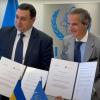
КПІ ім. Ігоря Сікорського став першим закладом вищої освіти України, який співпрацюватиме з МАГАТЕ! Практичні домовленості з МАГАТЕ дозволять здійснювати підготовку фахівців на ще більш високому рівні і посилити кадровий потенціал України у сфері ядерної безпеки і технологій.
КПІ ім. Ігоря Сікорського взяв участь в Українському форумі якості освіти UQAF-2025

📌 В рамках проведених панельних дискусій, воркшопів та інших активностей від КПІ до UQAF-2025 долучилися перший проректор Михайло Безуглий, начальник відділу акредитації та ліцензування Сергій Бур'ян і помічник ректорах з питань ветеранської політики Андрій Гаврушкевич.
Зустріч представників КПІ ім. Ігоря Сікорського з Українською науковою діаспорою у Австрії

У Відні відбулася зустріч представників КПІ ім. Ігоря Сікорського з Українською науковою діаспорою у Австрії.
Your 2025 Back-to-School Guide to All About Circuits’ Educational Resources
Solar-driven TEG advances via fabrication, not materials

Solar thermoelectric generators (STEGs) are used for direct conversion of impinging solar and thermal energy into electricity. It can be an alternative to photovoltaic cells in some cases, which can only make use of sunlight. STEGs consist of a hot side and a cold side separated by semiconductor materials, and the temperature difference between them generates electricity through the well-known Seebeck effect, Figure 1.
 Figure 1 New, high-efficiency STEGs were engineered with three strategies: black metal technology on the hot side, covering the black metal with a piece of plastic to make a mini-greenhouse, and laser-etched heat sinks on the cold side. Source: University of Rochester / J. Adam Fenster
However, widespread use of STEGs has been limited by their extremely low efficiency, typically under 1 percent; in contrast, standard consumer-grade solar panels have an energy-conversion rate of roughly 20 percent.
A team at the University of Rochester has focused on this low-efficiency challenge, but not by seeking to develop more advanced or esoteric materials. Instead, they used enhanced spectral engineering and thermal management methods in three ways to create a STEG device that generates 15 times more power than previous devices, Figure 2.

Figure 2 Theoretical design of spectral engineering and thermal management strategies for the STEG hot and cold sides: a) Schematic of enhancing STEG output power through hot- and cold-side thermal management. The hot-side thermal management system consists of a W-SSA and a greenhouse chamber to reduce heat loss. The cold-side thermal management system consists of a μ-dissipator, which enhances the cold-side heat dissipation. b) Four cases of STEG with (I) no thermal management, (II) hot-side thermal management, (III) cold-side thermal management, and (IV) both sides thermal management. c) Simulated STEGs’ peak output power with different thermal management strategies. d) Simulated energy flows in the four STEGs. The blue bars represent the energy flow through the STEG. Source: University of Rochester / J. Adam Fenster
By focusing on the hot and cold sides of the device, and by combining better solar energy absorption and heat trapping at the hot side with better heat dissipation at the cold side, they improved efficiency to about 15%.
First, they applied a specialized black metal technology developed in their lab to the hot side of the device, by modifying ordinary tungsten to selectively absorb light at solar wavelengths. They did this by using intense femtosecond laser pulses to etch nanoscale structures into the metal’s surface, which increased its ability to capture energy from sunlight while limiting heat loss at other wavelengths.
Second, the researchers covered the black metal with a piece of plastic to make a mini greenhouse. This minimized the convection and conduction to trap more heat, increasing the temperature on the hot side.
Third, on the cold side of the STEG, they once again used femtosecond laser pulses, but this time on regular aluminum. This created a heat sink with tiny structures that improved the heat dissipation through both radiation and convection, Figure 3. Doing so doubles the cooling performance of a typical aluminum heat dissipator.

Figure 3 A close-up of laser-etched nanostructures on the surface of a solar thermoelectric generator. Source: University of Rochester / J. Adam Fenster
Their tests and analysis separated the three improvement changes they implemented, so they could confirm the impact of each individual enhancement and compare it to their simulations, Figure 4.

Figure 4 Synergistic effect of STEG hot- and cold-side spectral and thermal management: a) Schematics of four cases of STEG with different thermal management strategies. b) STEG weight increases when adding the μ-dissipator, W-SSA, and greenhouse chamber to the TEG. c) STEG power-current curves under 3 suns. d) STEG peak output power under 1–5× solar concentrations. e) STEG power enhancement and TEG average temperatures under 1–5× solar concentrations by applying spectral and thermal management on both sides. f) Photos of LED illumination when powered by the four STEGs in (a). Source: University of Rochester / J. Adam Fenster
It’s obviously not possible to say how successful or practical this STEG approach will be. Nonetheless, it’s interesting to see their focused approach to the weaknesses of STEGs and how they avoided working on the materials-science aspects, but instead concentrated on design improvements. The work is detailed in their paper “15-Fold increase in solar thermoelectric generator performance through femtosecond-laser spectral engineering and thermal management” published in Light: Science & Applications.
Bill Schweber is an EE who has written three textbooks, hundreds of technical articles, opinion columns, and product features.
Related Content
- Is There a TEG in Your Power Future?
- TEG’s potential: Is it real, a dream, or in-between?
- Wearables benefit from flexible TEG materials
- TEG energy harvesting: hype or hope?
The post Solar-driven TEG advances via fabrication, not materials appeared first on EDN.
Сторінки




![[link]](https://i.redd.it/x7qzl30v6gqf1.jpeg)
![[link]](https://i.redd.it/kq8hz11avdqf1.png)
![[link]](https://i.redd.it/w4e17a2uddqf1.jpeg)
![[link]](https://i.redd.it/3h0hc6gzbbqf1.jpeg)
![[link]](https://i.redd.it/el2h5j2zx8qf1.jpeg)