


Збирач потоків
POET demos hybrid laser and next-gen high-power external light source for AI at OFC
Fuel cell sensors: From breath to benchmark

Fuel cell sensors are electrochemical devices designed for precise measurement. In measurement applications, they have become the gold standard for breath alcohol concentration detection, valued for their ethanol specificity, stability, and courtroom-grade accuracy. Compact and low power, they form the backbone of law enforcement breathalyzers, workplace safety programs, and consumer devices, consistently outperforming semiconductor and infrared (IR) alternatives.
Their proven reliability in complex breath matrices has made them indispensable for safety and compliance, while ongoing innovation is extending their reach into broader analytical domains. And while fuel cells generate clean energy, fuel cell sensors generate precise measurements—a distinction that defines their unique role in modern technology.
Applications and history
Before we get into the basics of how fuel cell sensors work, it’s worth noting their application landscape. While research has explored microbial fuel cell biosensors for environmental monitoring and niche industrial uses, the overwhelming commercial reality today is breath alcohol concentration (BAC) measurement.
Fuel cell sensors have become synonymous with BAC detection because of their unmatched ethanol specificity, stability, and courtroom-grade accuracy. Although BAC formally refers to blood alcohol concentration, in practice it is estimated through breath alcohol analysis. This singular focus has defined their role in law enforcement, workplace safety, and consumer devices, making BAC not just their flagship application but essentially their identity in the marketplace.
Technology itself traces its roots to the 1960s, when early electrochemical cells were adapted to detect ethanol in breath samples. By the late 1970s and early 1980s, law enforcement agencies began adopting fuel cell-based breathalyzers, recognizing their superior specificity compared to semiconductor sensors.
Over time, improvements in miniaturization, catalyst stability, and calibration protocols transformed them from bulky instruments into compact, portable devices. This evolution cemented fuel cell sensors as the trusted backbone of alcohol detection, setting the stage for their enduring role in safety and compliance.

Figure 1 A compact breathalyzer with a fuel cell breath alcohol sensor—Alcotest 4000—simplifies portable BAC measurement. Source: Dräger
As a quick aside, while fuel cells rely on chemical reactions, IR spectroscopy uses light to identify alcohol’s unique spectral fingerprint. By directing an IR beam through a breath sample, the instrument measures the specific wavelengths absorbed by ethanol molecules.
This physics-based method is non-destructive and highly precise, enabling real-time detection of “mouth alcohol” that could otherwise distort results. Because of their sophistication, accuracy, and long-term stability, IR units are reserved as definitive, desktop-based instruments in police stations, providing the courtroom-grade evidence required for testimony.
Fuel cell breath alcohol sensors
Now is the time for a gentle dive into a bit of theory and practice. At their core, these sensors operate on an electrochemical principle: ethanol molecules in exhaled breath are oxidized at a platinum electrode, producing an electrical current directly proportional to concentration. This reaction is simple yet elegant, converting chemical energy into a measurable signal that reflects blood alcohol concentration (BAC).
In practice, this design delivers a combination of portability, stability, and specificity that has made fuel cell sensors the dominant choice for breath alcohol testing. Unlike semiconductor sensors, which can be affected by other volatile compounds, fuel cells respond almost exclusively to ethanol.
Their compact form factor allows integration into handheld devices, while their long-term consistency ensures reliable results in roadside, workplace, and consumer contexts. This balance of theory and application explains why fuel cell sensors remain the benchmark technology for BAC measurement today.
In a nutshell, a fuel cell breath alcohol sensor is essentially a pair of platinum electrodes immersed in a dilute acid electrolyte. When a trace amount of ethanol from exhaled breath reaches the electrodes, it undergoes oxidation, releasing electrons that flow as current. The magnitude of this current is directly proportional to ethanol concentration, providing a simple yet highly reliable way to quantify blood alcohol concentration.
And fundamentally, the fuel cell breath alcohol sensor consists of a porous, chemically inert layer coated on both sides with finely divided platinum black. The porous layer is impregnated with an acidic electrolyte solution, and platinum wire connections are attached to the platinum black surfaces. The assembly is mounted in a plastic case with a gas inlet for introducing a breath sample. While manufacturers add proprietary refinements to this design, the basic configuration is shown in Figure 2.

Figure 2 Drawing illustrates the basic construction of a fuel cell breath alcohol sensor. Source: Author
Hands-on with fuel cell alcohol detection
For those eager to explore fuel cell alcohol sensors, the FS00702 electrochemical ethanol content module offers a robust solution. This fuel cell–type sensor operates through oxidation and reduction reactions at the working and counter electrodes, generating charges that form a measurable current. Current’s magnitude is directly proportional to alcohol concentration, in accordance with Faraday’s law, enabling accurate determination of ethanol levels.
Equipped with a high-stability gas sensor and a high-performance microprocessor, the module supports both UART and analog signal outputs for seamless integration. Its precise automatic calibration and advanced detection systems minimize human interference, ensuring consistent accuracy and reliability in large-scale production environments.

Figure 3 Highlighting FS00702 key specs: enabling makers to detect ethanol with precision, rapid updates, and easy microcontroller integration. Source: Henan Fosen Electronics Technology
As a side note worth mentioning, ethanol is one specific type of alcohol—the compound found in beverages and fuels—whereas “alcohol” broadly refers to a family of related molecules such as methanol, propanol, and isopropanol.
Fuel cell sensors like FS00702 are calibrated for ethanol detection since it’s the relevant analyte for intoxication measurement and fuel monitoring. While the sensor may respond to other alcohols, its accuracy is optimized for ethanol, making precise terminology important in technical contexts.
Practically speaking, sourcing high-quality fuel cell alcohol sensors for hobbyist projects is challenging, since most manufacturers prioritize finished breathalyzer units or bulk industrial modules.
Still, there are accessible alternatives to FS00702 for makers who value the accuracy and specificity of fuel cell technology. The Dart Sensors 2-Electrode fuel cell is considered a gold standard for precision, though it requires a custom amplifier circuit.
Fosensor’s FS00701 provides a smaller footprint than FS00702, ideal for portable builds. Meanwhile, FS00702 itself remains versatile, offering both raw analog output for custom conditioning and a built-in UART option for straightforward microcontroller integration.
Winsen’s ZE321 automotive alcohol module offers a compact design with a convenient UART interface, making it more user-friendly for DIY integration. The ZE321 module operates on the fuel cell electrochemical principle. When the built-in pressure sensor detects exhaled air flowing through the sampling tube at the required rate, the solenoid valve quickly opens to admit a measured volume of breath.
Within the sensor, alcohol and oxygen undergo a redox reaction, generating an electrical current proportional to ethanol concentration. The module’s circuitry measures this current and, after algorithmic processing, outputs an accurate determination of breath alcohol content.

Figure 4 The ZE321 automotive alcohol module monitors exhaled breath flow, samples a fixed volume of gas, and actively detects alcohol content through its fuel cell electrochemical reaction. The onboard circuitry processes the resulting current signal to deliver accurate breath alcohol measurements. Source: Winsen
Accuracy today, innovation ahead
In practical terms, fuel cell–based alcohol testing devices deliver the highest accuracy in measuring breath alcohol content, leaving little room for error. Even so, it’s wise to allow for a small margin of discrepancy. When evaluating any alcohol detection instrument—whether for personal safety, workplace compliance, or automotive use—the sensor type is critical. If precision matters most, fuel cell sensor technology remains the benchmark to aim for.
For makers and engineers, the challenge is clear: fuel cell sensors are not confined to alcohol testing; they are gateways to precision sensing, sustainable energy, and inventive applications across domains. Experiment boldly, share your builds, and push the boundaries of what these devices can achieve. The next breakthrough could start on your workbench.
 T. K. Hareendran is a self-taught electronics enthusiast with a strong passion for innovative circuit design and hands-on technology. He develops both experimental and practical electronic projects, documenting and sharing his work to support fellow tinkerers and learners. Beyond the workbench, he dedicates time to technical writing and hardware evaluations to contribute meaningfully to the maker community.
Related Content
- Hydrogen Fuel-Cell Vehicles
- Paper-Based Biofuel Cells Power Disposable Electronics
- xEVs Opening New Opportunities for Sensor Development
- Designing a portable system for in situ failure prediction in fuel cells
The post Fuel cell sensors: From breath to benchmark appeared first on EDN.
Everspin Launches New Generation of Unified Memory for Embedded Systems
Everspin Technologies, a leading developer and manufacturer of magnetoresistive random access memory (MRAM) persistent memory solutions, today announced the UNISYST MRAM family, a new generation of unified memory designed to fundamentally change how embedded systems store and access code and data.
“System designers are running into the physical and performance limits of NOR flash, especially as process nodes move below 40 nanometers and workloads become more demanding,” said Sanjeev Aggarwal, president and CEO of Everspin Technologies. “With UNISYST, we are extending our MRAM roadmap to higher densities while giving customers a practical way to start with PERSYST today and migrate to a code-and-data MRAM architecture as soon as it is available.”
UNISYST is a unified code-and-data MRAM architecture that bridges traditional configuration memory and higher-density persistent storage, extending MRAM into traditional NOR flash applications where superior performance, endurance and reliability are valued. Built as a natural extension of Everspin’s existing PERSYST MRAM platform, UNISYST gives customers a practical, simple migration path from today’s serial MRAM devices to higher-density unified memory without requiring changes to system architecture or software.
Everspin will initially offer the UNISYST family in densities ranging from 128 megabits to 2 gigabits, using a standard xSPI interface operating up to octal SPI at 200MHz. The devices are planned to feature AEC-Q100 Grade 1 qualification and minimum 10-year data retention at extreme temperatures, supporting demanding environments across automotive, aerospace, industrial and edge AI applications.
“As generative AI models move from the cloud to embedded systems, we’re suddenly dealing with assets that are tens or even hundreds of megabytes in size,” said Kwabena W. Agyeman, President and Co-founder of OpenMV. “Storing those models is only part of the challenge — updating them quickly during development and deployment is equally important. High-speed, non-volatile Everspin UNISYST MRAM changes what’s practical for edge AI systems by removing the write bottlenecks associated with traditional flash.”
UNISYST delivers high-bandwidth read and write speeds in a non-volatile memory device, enabling fast boot, rapid updates and predictable performance without the tradeoffs of traditional flash-based designs. By combining high-speed access with persistent storage, UNISYST supports software-defined systems that require frequent reconfiguration while maintaining data integrity across power cycles.
Everspin MRAM has been deployed in mission-critical storage applications for nearly two decades, valued for its endurance and reliability. UNISYST builds on Everspin’s proven MRAM foundation with capabilities designed to support more complex, software-defined systems:
- Code-and-data MRAM architecture designed as a next-generation alternative to other non-volatile memory
- Standard xSPI interface operating up to octal SPI at 200MHz
- Read bandwidth of up to 400 MB/s and write bandwidth of approximately 90 MB/s, over 400 times faster than NOR flash
- Write endurance up to 10 times higher than typical NOR
- AEC-Q100 Grade 1 qualification and minimum 10-year data retention for high-reliability designs
UNISYST is aimed at applications where non-volatile memory must combine high bandwidth, high endurance and predictable behaviour over temperature and time. Target use cases include:
- AI at the edge: Fast AI weight updates, critical storage at the edge, local code-and-data storage for workloads that need fast boot, rapid reconfiguration and non-volatile operation close to the sensor, with the ability to execute in place, removing the need for multiple system memories
- Military and aerospace: Field-programmable gate array (FPGA) configuration and code storage for mission-critical systems, including low-Earth orbit satellites and other platforms that require frequent over-the-air updates
- Automotive: Control, logging and configuration memory in systems that must meet Grade 1 temperature requirements and long-term data retention
- Industrial and casino gaming: High-traffic logging and configuration in environments that demand fast writes, long endurance and persistent storage supporting data logging
The launch of UNISYST represents a platform-level expansion of Everspin’s MRAM portfolio, extending the company’s role from a niche memory supplier to a mainstream memory player serving a multibillion-dollar market. By unifying code storage and data memory, Everspin is addressing the growing demands of software-defined systems that require faster boot times, frequent updates and predictable behaviour over long operating lifetimes.
The post Everspin Launches New Generation of Unified Memory for Embedded Systems appeared first on ELE Times.
Photon Design showcasing new HAROLD QD laser simulator and silicon modulator design tool at OFC
La Luce Cristallina releases beta-version of 200mm barium titanate wafer
🔔 Вступ до аспірантури

Міністерство освіти і науки України оприлюднило календарні плани проведення вступних випробувань до аспірантури у 2026 році. Іспити проходитимуть за технологіями зовнішнього незалежного оцінювання. Про це повідомили на офіційному сайті міністерства.
TI’s microcontroller portfolio and software ecosystem expanded to enable edge AI in every device
Texas Instruments (TI) introduced two new microcontroller (MCU) families with edge artificial intelligence (AI) capabilities, supporting the company’s commitment to enabling edge AI across its entire embedded processing portfolio. The MSPM0G5187 and AM13Ex MCUs integrate TI’s TinyEngine neural processing unit (NPU), a dedicated hardware accelerator for MCUs that optimises deep learning inference operations to reduce latency and improve energy efficiency when processing at the edge.
TI’s embedded processing portfolio is supported by a comprehensive development ecosystem, including the CCStudio integrated development environment (IDE). Its generative AI features allow engineers to use simple language to accelerate code development, system configuration and debugging through industry-standard agents and models paired with TI data. Altogether, TI is accelerating the adoption of edge AI across electronic devices, from real-time monitoring in wearable health monitors and home circuit breakers to physical AI in humanoid robots. These end-to-end innovations are featured in TI’s booth at embedded world 2026, March 10-12, in Nuremberg, Germany.
“TI invented the digital signal processor almost 50 years ago, laying the groundwork for today’s edge AI processing,” said Amichai Ron, senior vice president, Embedded Processing and DLP® Products at TI. “Now TI is leading the next phase of innovation by integrating the TinyEngine NPU across our entire microcontroller portfolio, including general-purpose and high-performance, real-time MCUs. By enabling AI across our software, tools, devices and ecosystem, we are making edge AI accessible and easy to use for every customer and every application.”
“While much of the world has been focused on AI acceleration and NPUs in bigger SoCs, it turns out some of the more interesting and far-reaching applications of AI can be enabled inside smaller chips like microcontrollers,” said Bob O’Donnell, President and Chief Analyst at TECHnalysis Research. “Edge-based applications of AI acceleration can make consumer devices more intelligent and industrial devices more efficient. Plus, if you can combine these chips with software development tools that themselves leverage AI to help build AI features, you bring the power of AI acceleration to a significantly wider audience of engineers and device designers.”
Advanced intelligence at your fingertips
Consumers are always looking for everyday technology to be more intelligent, from fitness wearables to home appliances and electrical systems. However, many engineers believe that AI capabilities are limited to higher-end applications due to high costs, power demands, and coding requirements. TI’s new MSPM0G5187 Arm Cortex-M0+ MSPM0 MCU represents a fundamental shift for embedded designers, who can now bring edge AI to a wide range of simpler, smaller and more cost-effective applications.
With local computation, the TinyEngine NPU executes computations required by neural networks in parallel to the primary CPU running application code. Compared to similar MCUs without an accelerator, this hardware acceleration:
- Minimises the flash memory footprint.
- Lowers latency by up to 90 times per AI inference.
- Reduces energy utilisation by more than 120 times per AI inference.
Such levels of efficiency allow resource-constrained devices – including portable, battery-powered products – to process AI workloads. At under US$1 in 1,000-unit quantities, the MSPM0G5187 MCU reduces system and operating costs by offering an affordable alternative to other MCU or processor architectures.
Real-time control plus AI acceleration for multimotor systems
Motor control applications in appliances, robotics and industrial systems increasingly call for intelligent features such as adaptive control and predictive maintenance, but implementing these capabilities has historically required complex, multi-chip designs. Building on over two decades of motor control leadership through the C2000 real-time MCU portfolio, TI’s new AM13Ex MCUs are the industry’s first to integrate a high-performance Arm Cortex-M33 core, TinyEngine NPU and advanced real-time control architecture into a single chip.
This degree of integration enables designers to implement sophisticated motor control and AI features simultaneously without external components, lowering bill-of-materials costs by up to 30%. Key enhancements include:
- The ability to maintain precise real-time control loops for up to four motors while the TinyEngine NPU runs adaptive control algorithms for load sensing and energy optimisation.
- An integrated trigonometric math accelerator that performs calculations 10 times faster than coordinate rotation digital computer (CORDIC) implementations, delivering more precise, responsive motor-control performance.
Easily train, optimise and deploy AI models
Both MCU families are supported by TI’s CCStudio Edge AI Studio, a free development environment that simplifies model selection, training and deployment across TI’s embedded processing portfolio. This edge AI toolchain gives engineers full flexibility to run AI models on TI MCUs through either hardware or software implementations. Today, there are more than 60 models and application examples available in the tool to help developers start deploying edge AI in any device, with additional tasks and models planned in the future.
The post TI’s microcontroller portfolio and software ecosystem expanded to enable edge AI in every device appeared first on ELE Times.
Dual SCR dimmer circuit
 | Finally got my phase control circuit off the breadboard and soldered together. Adjusting the potentiometer changes where in the ac waveform the scr fires, thereby allowing for more or less average power delivered to the load. It is the same idea as a triac based lamp dimmer circuit, but using back to back scrs allows for higher power handling capability, and is more suited for inductive loads. This one will be used to adjust the speed of an angle grinder for use as an asynchronous rotary spark gap for my Tesla coil. [link] [comments] |
New toy adr1001 devboard
 | I'm playing with it for now. I'll see what the measurements show and what the difference is between a wall adapter and a linear power supply. But a quick measurement showed it was pretty good. Plc 20 Max = 5.0008206V Min = 5.0008197V Std = 0.2 ppmV Also I need to make a box for it. [link] [comments] |
NUBURU’s Lyocon completes proof-of-concept for portable directed-energy laser platform
Inside of an CO/smoke detector.
My CO alarm recently expired so I have opened it, curious about the insides. To my surprise, it looked like the CO sensor was missing! Thanks to this blog I found the sensor and learned a lot more. In the age of AI slop, I truly appreciate websites like that and though I will share this find.
[link] [comments]
Logitech wireless mouse sensor
 | These photos were taken under a microscope, the mouse was gaming and I found the shape of the sensor interesting since it was mounted on a flexible board and had a lens on it. [link] [comments] |
Wolfspeed unveils foundation for AI data-center advanced packaging leveraging 300mm silicon carbide
Lumentum promoted from S&P MidCap 400 to S&P 500 index
Пам'яті Артема Круликовського

😢 Наша університетська спільнота знову зазнала втрати. Стало відомо про загибель ще одного студента Київської політехніки Артема Круликовського.
Spain’s VLC Photonics and Hitachi High-Tech America announce strategic collaboration in North America
R&S to showcase future-proof EMC testing solutions at EMV 2026
Rohde & Schwarz will participate in EMV 2026, Europe’s premier trade fair and congress dedicated to electromagnetic compatibility, held from March 24-26 in Cologne. At the event, which serves as a crucial platform for industry professionals, the company will show its latest advancements in test & measurement equipment to address the evolving challenges within the EMC landscape.
Rohde & Schwarz will demonstrate a broad portfolio of solutions designed to streamline and optimise EMC testing across diverse sectors, including power electronics, consumer, industrial, automotive, Satcom, military, and wireless communications. EMC testing is evolving to meet the demands of emerging technologies and a crowded radio frequency spectrum. Innovations like AI, 6G, and quantum computing present new challenges for ensuring reliable performance, while widespread electrification and increased bandwidth requirements necessitate testing at higher frequencies. To address these shifts, Rohde & Schwarz is developing scalable and modular test solutions focused on repeatable, reliable measurements – streamlining the path from initial assessment to final certification. A further focus is on bridging the gap between real-world field performance and laboratory testing.
At the show, Rohde & Schwarz will showcase a versatile and adaptable solution for conducted and radiated emission testing with the EMI test receivers R&S EPL1001 and R&S EPL1007 with frequency ranges up to 1 GHz and 7.125 GHz. These receivers provide a scalable approach to EMC testing, allowing users to select the optimal configuration for their needs, whether for efficient pre-compliance measurements or fully CISPR 16-1-1 compliant testing for certification.
Rohde & Schwarz is showcasing a speed-optimised EMI test with its industry-leading R&S ESW test receiver — with ESW-B1000R 970 MHz bandwidth extension — and the automated R&S ELEKTRA software: A live demonstration highlights the system’s capabilities for rapid and detailed device characterisation with 3D emission plots generated by R&S ELEKTRA for a typical commercial EMI test. Complementing this is the R&S HF1444G14 high-gain antenna, extending testing capabilities up to 44 GHz for standards like MIL-STD and FCC.
Rohde & Schwarz will also be expanding its R&S BBA300 family of broadband amplifiers with its new dual-band amplifier series R&S BBA300-CDE/FG for 380 MHz to 13 or 18 GHz and the R&S BBA300-DE1000 with an output power of up to 1000 W in the 1 GHz to 6 GHz range. With high linearity, continuous and very wide frequency bands, and innovative protection concepts for high availability, the R&S BBA300 family meets the requirements for EMC immunity testing today and tomorrow.
Rohde & Schwarz will also show its full vehicle antenna test (FVAT) capabilities at the show. Modern vehicles increasingly rely on multiple antennas – for GNSS, Wi-Fi, cellular services like C-V2X, and more to enable safety, convenience and infotainment features – requiring comprehensive full-vehicle antenna testing. This testing enables vehicle manufacturers and their suppliers to characterise radiation performance, verify RF robustness, ensure co-existence of different wireless technologies and ultimately validate the functions and services enabled by wireless connectivity.
For in-depth signal analysis, Rohde & Schwarz will feature the R&S MXO 3 Series oscilloscope, boasting an unmatched acquisition rate exceeding 4.5 million waveforms per second and featuring up to 8 channels. This advanced oscilloscope also includes powerful standard functions such as a very fast FFT and zone trigger capabilities that empower engineers to quickly and precisely understand complex circuit behaviour, essential for effective EMI troubleshooting and design optimisation.
Rohde & Schwarz will also actively contribute to the congress with technical sessions, workshops and demos focusing on EMI test speed optimisation, EMC for medical products and closed-loop Reverb chamber testing. Attendees can also join a panel discussion exploring the impact of Artificial Intelligence on the EMC landscape, covering its current benefits and potential future challenges. Besides others, a Rohde & Schwarz expert will discuss AI’s role in areas like testing and development, and address concerns about new vulnerabilities.
The post R&S to showcase future-proof EMC testing solutions at EMV 2026 appeared first on ELE Times.
Infineon extends leadership position in global microcontroller market
Infineon Technologies further extends its number one position in the global microcontroller market. According to the latest research by Omdia [1], the company increased its total microcontroller market share to 23.2 per cent in 2025 (2024: 21.4 per cent), achieving a year-on-year gain of 1.8 percentage points – the largest increase among its competitors. Notably, this market share gain was achieved against the backdrop of a slightly declining microcontroller market (-0.3 percent).
“This great market result reflects our relentless commitment to accelerating innovation for customer value, outstanding system solutions, and strong customer relations,” said Andreas Urschitz, Chief Marketing Officer and Member of the Management Board at Infineon. “With our superior product portfolio, reliable software, and easy-to-use development tools, we help our customers create value and address the global challenges of decarbonization and digitalisation. Outgrowing the market is a direct outcome of our continued investment in technology and our close collaboration with our partners worldwide.”
Ethernet to enhance microcontroller business for software-defined vehicles
Infineon climbed to the top spot in the global microcontroller market for the first time in 2024, after becoming the number one in the specific market for automotive microcontrollers already one year earlier. The company’s leading market position will be further strengthened by the successful acquisition of Marvell’s Automotive Ethernet business, a milestone transaction completed in August 2025. This move expands Infineon’s cutting‑edge connectivity portfolio, enhancing the company’s system capabilities for central compute architectures in software-defined vehicles (SDV). Integrating the industry-leading BRIGHTLANE automotive Ethernet portfolio with Infineon’s AURIX, PSOC and TRAVEO automotive microcontroller families creates an unmatched system offering for SDVs, enabling features such as autonomous driving, advanced driver‑assistance systems, and secured over‑the‑air updates.
Infineon microcontrollers empower physical AI, such as humanoid robots
Furthermore, the acquisition opens additional growth opportunities in emerging IoT fields and physical AI, such as humanoid robotics. AURIX, PSOC and MOTIX microcontrollers from Infineon empower humanoid robots to safely perceive, think, and interact with their environment in real-time, facilitating advanced computing, smart actuation and motor control, connectivity, and intelligent edge functions.
Infineon enables the key functional blocks in humanoid robots, supporting customers from concept to mass production across industrial, service, and home applications. With its PSOC portfolio, Infineon continues to expand its presence in industrial and consumer markets, offering scalable, secure, and power‑efficient microcontroller solutions widely used in smart home systems, industrial control equipment and connected IoT devices.
Cybersecurity features for future requirements are already implemented today
From IoT devices to connected vehicles, industrial infrastructure, AI‑driven applications, and robotics, cybersecurity is essential. Therefore, Infineon microcontrollers are engineered with future-proof security in mind to protect data, identities and systems from the start and across the entire lifecycle. This includes, for example, complying with international security standards such as ISO/SAE 21434 (automotive security) for the latest generation AURIX and TRAVEO MCUs. Furthermore, Infineon engineers architectures that meet future requirements, such as from the EU Cyber Resilience Act or for post-quantum cryptography, already today – for example, in the latest PSOC products for industrial and consumer applications, as well as AURIX and TRAVEO automotive MCUs.
Infineon at embedded world 2026: Showcasing future-ready innovations
From 10 to 12 March 2026, at embedded world in Nuremberg, Germany, Infineon is presenting its comprehensive portfolio of industrial, consumer and automotive microcontrollers, with a strong focus on innovation for secured, connected, and intelligent systems. Visitors can experience this at Infineon’s booth (Hall 4A, Booth 138) and through a series of presentations and live demos.
[1] Based on or includes research from Omdia: Annual 2001-2025 Semiconductor Market Share Competitive Landscaping Tool – 4Q25. March 2026. Results are not an endorsement of Infineon Technologies AG. Any reliance on these results is at the third party’s own risk.
The post Infineon extends leadership position in global microcontroller market appeared first on ELE Times.
Newer, shinier DMM RTDs—part 1

This two-part Design Idea (DI) follows on from a couple of previous articles relating to 100-Ω platinum resistance temperature detectors (Pt100 RTDs). The first of those (which we’ll call Ref 1) used a simple current-driven bridge to give an output of 1 mV/°C (or /K, if you prefer) that could be read directly on a DMM, while the second (Ref 2) had a ratiometric output to emulate an NTC thermistor but with greater range and accuracy.
Wow the engineering world with your unique design: Design Ideas Submission Guide
Ref 1 was useful but too simple: it was precise at its calibration temperatures of 0 and 100°C, but had an inherent error of nearly 0.4° at 50°C because an RTD’s resistance is not quite linear with temperature. Ref 2 compensated for that with good precision—and discussed how the Callender–Van Dusen (CVD) equations are key to doing so—but was rather specialized.
Finalizing and extending the circuit must wait for the second part of this DI. Its first part will use the heart of Ref 2 to implement the function of Ref 1 and find out what else needs fixing.
That heart is the fairly conventional circuit shown in Figure 1.
 Figure 1 A simple circuit feeds the RTD, amplifies the resulting voltage, and uses some positive feedback to compensate for the sensor’s non-linear response to temperature.
Fairly obviously, Vref and Rfeed drive current through the RTD producing a voltage that is amplified by 1 + Rgain1 / Rgain2. That voltage is only nearly proportional to absolute temperature, so Rpfbk adds a little positive feedback to (almost) linearize the output. Its value is critically dependent on Rfeed and the gain, and, as described in Ref 2, is best found by iterated simulation. (Though later, we’ll see a useful shortcut.) Figure 2 shows the resulting error curve, which scarcely changes for gains above ~3 once Rpfbk has been optimized.

Figure 2 With compensation, the circuit’s output can be very close to ideal. (Real-world components may modify this somewhat.)
Our aim is to make a box that will give a DMM-useful 1 mV/°C output, but properly compensated. Figure 1’s circuit was a good starting point; now Figure 3 shows the end point.

Figure 3 Compensated gain stage A1a gives an output of just over 1 mV/°C, with an offset. A1b generates a voltage corresponding to that offset at 0°C. Tracking of the two op-amp halves should minimize errors.
A1a works just like Figure 1, using a 1.24 V reference. Using 3k3 for Rfeed and a gain of 6.6, its output sits close to 258 mV for an RTD resistance of 100Ω (0°C) and increases by ~1.05 mV/°C, which is dropped to a precise 1 mV/°C by R6 and R7. Keeping the gain trim passive and away from A1a’s feedback loops avoids any interactions. R5, our former Rpfbk, was calculated—or rather, homed in on—in the same way as its counterpart in Ref 2, using successive approximations in the graphical sim until the error curve was flattest.
A2b provides an offset reference at that ~258 mV level, so that 0°C at the sensor will give 0 mV across the outputs. It’s basically a clone of A1a to ensure good thermal matching. Calibration is easy: set the 0°C/0 mV point with R14, then trim R6 for an exact 100 mV at 100°C.
Even easier calibration
Ice-buckets and kettles are not really needed yet and are best saved for the final calibration with the actual sensor connected. For experimenting and troubleshooting, make up a gadget involving a carefully-selected 100-Ω resistor, a nominal 39 Ω with something in parallel to give 38.5 Ω, and a decent switch to short out the latter pair. Now you can easily flick between simulated 0 and 100°C inputs: easier and quicker than my original pot-based kludge.
Nicely balanced?
As noted above, A1b’s circuit is very similar to A1a’s. A trimmable resistive network could provide the reference, but this active approach ensures that any thermal effects in A1a will be balanced by those in A1b. After all, if two identical op-amps are sat side-by-side on a sub-squillimeter speck of silicon, they will behave identically, especially where temperature drifts are concerned, right?
Wrong!
Figure 3’s circuit worked perfectly, but for one thing: it wasn’t temperature-stable—not a good thing in a thermometer. Checking half-a-dozen MCP6002s mostly showed bad input-offset mismatches between the two halves. Those could be trimmed out, but unbalanced temperature drifts couldn’t—and they predominated, leading to reading errors of up to 1° for a 10° change in the circuit’s temperature. I did find one IC that was okay, but making this idea work properly called for a slightly different approach. All will be revealed in Part 2.
That feedback resistor
For the greatest accuracy at and around the 0 to 100°C calibration points, the value for Rpfbk is critical. (Those points are also used to define the slope against which the response is checked.)
For a wider range but with a different balance of errors, Rpfbk needs to be reduced. (Again, we’ll explore that further in Part 2.) Throughout, R5 or Rpfbk is shown to 4 or 5 places; it needs a little work to find the best series/parallel combinations. All other components were chosen from E12/24 values, though some need to be closely toleranced.
Now for that shortcut to determine Rpfbk. Some work with the simulator gave optimized values for Rpfbk with gain values from 4 to 100, with ad hoc curve-fitting suggesting equations giving good approximations to the target values. Here they are:
Rpfbk = Rfeed × Gain × k
where Rfeed = 3k3
k = (2.19 – exp(1 / Gain)) / 2.70 [for Gains from 4 to 10]
or (2.035 – exp(1 / Gain)) / 2.31 [—from 8 to 100]
“Good approximations” means that the errors are always <0.05°C and mostly around 0.01°C, giving a good fit for temperatures from below -55 to above +125°C. If R3–5 are within 0.1%, errors due to their tolerances will be in the same range. All these circuits use a 3k3 feed resistor; I’ve not checked these equations with other values.
Await Part 2
We now have a basic circuit capable of decent performance, apart from its own tempco. The second part of this DI will fix that flaw, show some interesting variants—hence the plural in the title—and even add some bells and whistles. Think of this part as the theme, with Part 2 exploring the variations.
—Nick Cornford built his first crystal set at 10, and since then has designed professional audio equipment, many datacomm products, and a technical security kit. He has at last retired. Mostly. Sort of.
Related Content
- DIY RTD for a DMM
- Dropping a PRTD into a thermistor slot—impossible?
- Improved PRTD circuit is product of EDN DI teamwork
- Fake contacts, bounced to order
- Calculation of temperature from PRTD resistance
The post Newer, shinier DMM RTDs—part 1 appeared first on EDN.
Traction Inverter: Keys to understanding the inverter, the traction, and why X-in-1 solutions are increasingly popular
Courtesy: STMicroelectronics
Traction inverters are at the heart of electric vehicles, meaning that they are one of the modules with the most significant impact on overall efficiency, range, and performance. According to the US Department of Energy, the electric drive system is responsible for some of the most significant losses in an EV, totalling about 18%. Moreover, a report by McKinsey & Company explains that the “top reasons” for consumers to avoid EVs are costs, charging concerns, and range anxiety, two of which are mainly impacted by the traction inverter’s performance. Optimising the electric drive train is thus the quickest and surest way to improve an EV to make it more compelling, and why ST recently published a white paper on traction inverters
Why are traction inverters challenging? The role of a traction inverter A traction inverter
In a nutshell, the traction inverter takes the DC electrical energy from the battery, converts it into properly commutated three-phase alternating current, and sends it to a traction motor, which then converts it into kinetic energy. Consequently, the traction inverter is also responsible for modulating the AC sent to the motors to adjust for things like torque and speed. Similarly, regenerative braking, which converts mechanical energy into DC power to recharge the battery, also depends on the traction inverter. Hence, the reason drivers love the responsiveness of their EVs, as well as how certain driving features can extend the overall range, is dependent on the performance of the traction inverter, among other things.
The challenges behind the traction and the inversion A DC-DC Converter
While most two-wheel-drive vehicles will have one or two inverters, an all-wheel drive may have up to one inverter per traction motor and one traction motor per wheel. It all depends on how car makers want to address the car’s overall performance. Hence, it’s easy to see some of the challenges that engineers must solve when designing a traction inverter that must not only convert electrical energy but also sense phase current, monitor motor position, and even manage control loops. While many engineers focus on the “inverter”, “traction” comes with a unique set of challenges, such as determining a rotor’s position with precision, or the whole traction inverter will be grossly inefficient.
Moreover, as EVs increasingly support high-power DC charging, they come with higher DC-link voltages, which means the traction inverter must adapt to reduce losses while enabling traction motors to draw more power. It’s a great example of how modern car modules are highly interdependent and how changing one aspect of the vehicle has ripple effects on many other systems and modules. As the white paper shows (see Table 3), there’s a strong “correlation between motor power, battery size, and DC link voltage.” Put simply, engineers can’t design traction inverters in isolation but must take a more global approach or risk seriously hampering performance due to a poorly suited system.
How to find solutions and design great traction inverters? Choosing the right gate driversTo answer these challenges, the white paper aims to provide key concepts and solutions engineers can apply to their designs. For instance, it looks at how to use gate drivers and power transistors to modulate the current in stator windings. Too often, teams treat these devices as commodities and miss the critical impact they may have on their traction inverters. However, a mismatch between the transistors and gate drivers will result in significantly higher losses, among other things. It’s why a galvanically isolated driver for IGBT and SiC MOSFETs, like the STGAP4S, can make a tremendous difference. ST even offers an evaluation board, the EVALSTGAP4S, which significantly hastens the development of a proof of concept.
Finding the right microcontroller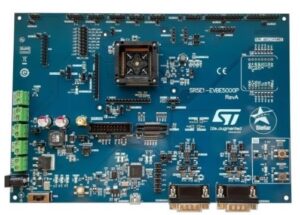 The SR5E1-EVBE5000P
Another challenge is the ability to control the traction motors with enough precision and speed to improve the EV’s performance. Such a feat is directly tied to the microcontroller that will house the PWM timers and the logic responsible for calculating the field-oriented control mechanisms, among other functions. Using the wrong device will not only hinder performance but also create critical problems that cannot be fixed easily unless the platform supports things like over-the-air updates, the highest levels of functional safety, and more. ST is already offering MCUs tailored for EV applications, like the new Stellar E series and evaluation boards like the SR5E1-EVBE5000P.
Adopting the X-in-1 trendAnd the white paper contains so many more solutions, tips, and expert advice. As ST offers a unique and wide-ranging portfolio of devices that can directly improve traction inverters, the paper also helps engineers anticipate a new trend: X-in-1. Increasingly, we see makers coming up with integrated systems that include the on-board charger, DC-DC converter, and traction inverter. Since these systems impact one another, integrating them helps create a more meaningful and intentional design. However, that means engineers must widen their expertise and rely on a portfolio that includes a broader range of devices.
The post Traction Inverter: Keys to understanding the inverter, the traction, and why X-in-1 solutions are increasingly popular appeared first on ELE Times.
Сторінки




![[link]](https://i.redd.it/hutq056xiaog1.jpeg)